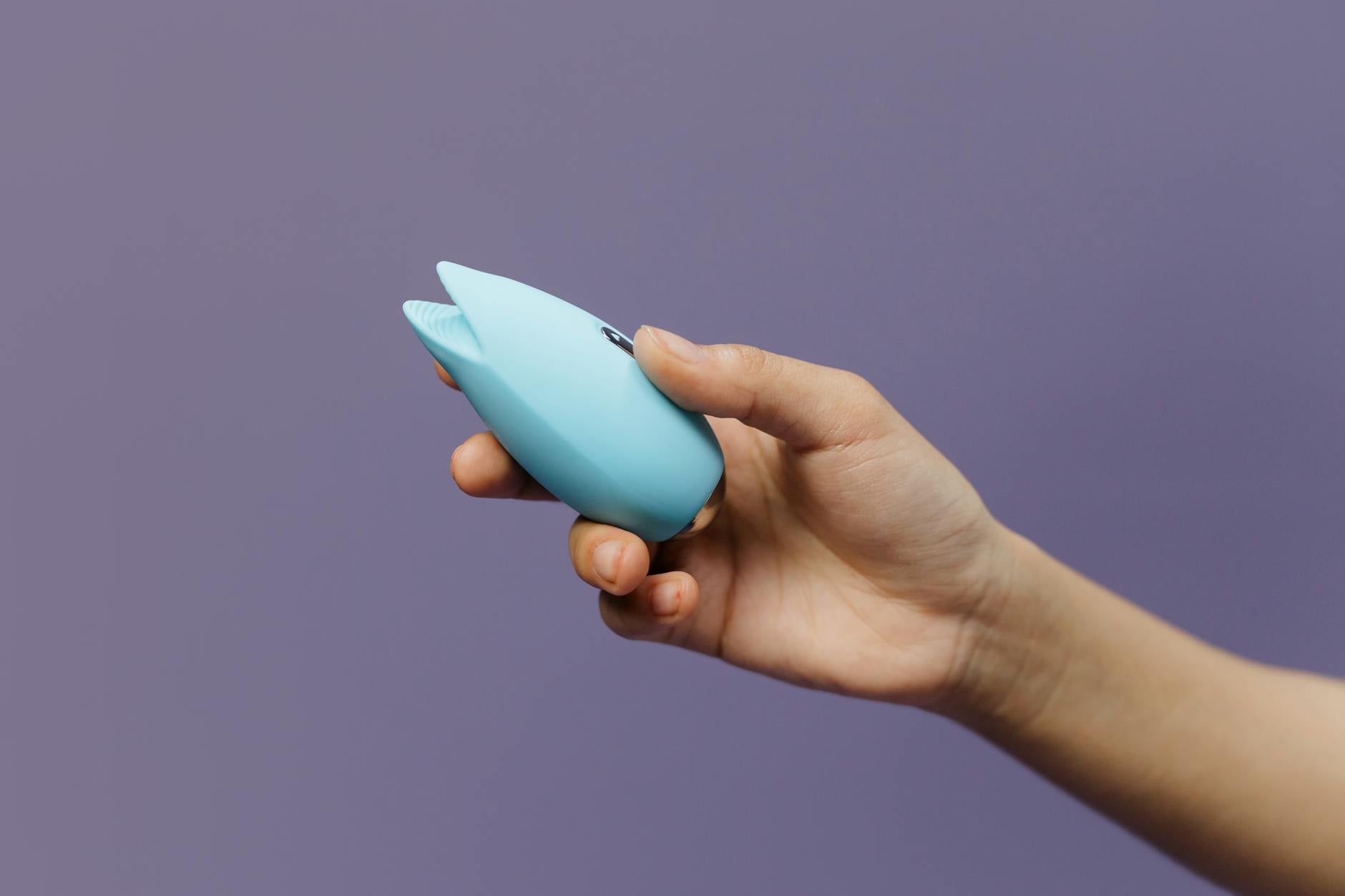
Let's talk about skin reactivity and pleasure
Honestly, sensitive skin gets treated like a buzzkill in the toy world. "Just use silicone," everyone says. "It's hypoallergenic." Except when it isn't. Because it turns out that "hypoallergenic" is a marketing term, not a scientific one, and plenty of people with reactive skin have had their genitals feel like they were set on fire by a "body-safe" toy.
You deserve to explore lemon vibrators and other clitoral vibrators without your body punishing you for it.
Why sensitive skin reacts to toys in the first place
Your vulva and vagina have some of the thinnest, most permeable skin on your body. The barrier function is delicate. That means irritation happens faster there than almost anywhere else. Add in the fact that the vaginal microbiome is finely balanced, and even small chemical exposures can trigger inflammation, allergies, or yeast overgrowth.
There are three main culprits:
Material contaminants. Even medical-grade silicone can contain phthalates, BPA, or heavy metals if it's not manufactured to strict standards. Budget toys cut corners. You're not being paranoid if you've had a reaction.
Lubricant incompatibility. The water-based lube you use matters as much as the toy itself. Some lubes contain glycerin, parabens, or glycols that trigger irritation in sensitive people. Your lube can be the silent saboteur.
Fragrance and additives. Some manufacturers add "scents" to toys or use additives that sound nice in marketing copy but wreck your skin. This is honestly inexplicable and worth avoiding entirely.
The material hierarchy for sensitive skin
Not all silicones are created equal, and neither are other body-safe materials.
Medical-grade silicone is the gold standard. It's platinum-cure silicone that's been processed to remove potential contaminants. When you're looking at a lemon vibrator or any clitoral vibrator from Hello Nancy, you're getting toys made from this standard. The manufacturing process matters more than the fact of silicone itself.
Glass and stainless steel are genuinely inert. Nothing leaches. Nothing reacts. If you have severe sensitivity, these are your safest bets, though they're not ideal for all types of clitoral stimulation.
TPE, jelly rubber, and mystery elastomers are where problems start. These materials often contain phthalates to stay flexible, and they degrade over time, leaching chemicals. If a toy is called "jelly" or costs under $25, it's probably one of these. Skip them.
Borosilicate glass is the second-tier option if you want something transparent or aesthetically different. It's safe but more fragile.
How to vet a toy before buying
Three concrete checks:
Check the manufacturer's safety documentation. A reputable brand publishes third-party testing results showing that their silicone is phthalate-free and meets FDA or CE standards. If it's not on their website within three clicks, that's a red flag. Hello Nancy publishes ours because we're not hiding anything.
Smell test. This sounds simple but works. Medical-grade silicone has a faint rubbery or earthy smell, or none at all. If a toy smells chemical, plasticky, or "fruity" when it has no scent ingredient listed, it's probably off-gassing phthalates or other solvents. Don't buy it.
Feel the surface. High-quality silicone feels smooth, slightly cool, and a little waxy. It shouldn't feel sticky, greasy, or tacky. If it feels oily or sticky out of the box, something's been added to the surface.
Lubrication strategies for reactive skin
Your lube choice is as important as your toy choice. Here's what works for sensitive bodies:
Water-based lubes without glycerin, parabens, or propylene glycol. Look for ingredient lists that are short and readable. Better yet, look for formulas marked "hypoallergenic" by a dermatologist, not just a brand. Some people swear by organic, food-grade options, though the evidence for superiority is thin.
Coconut oil, if you're not prone to yeast infections. It's not the best for silicone toys because it can degrade the surface slightly over very long periods, but it's genuinely gentler on skin than most commercial lubes. Test a small amount on your inner arm first.
Pre-emptive hydration. This isn't about lube, it's about your tissue. If your skin is reactive, it's often dehydrated. Using a gentle, fragrance-free vaginal moisturizer a few times a week can dramatically reduce irritation during play. It's a simple intervention most people skip.
What to do if you've already had a reaction
First, stop using the toy. Continuing is like scratching a rash. Your vulva needs to heal.
Second, rinse with cool water. Not harsh soap, not douche, just cool water. Pat dry gently.
Third, apply a barrier cream or vaginal moisturizer. Something fragrance-free, ideally designed for sensitive areas. If irritation lasts more than a day or two, or if you develop discharge, see a gynecologist. Toy reactions can sometimes trigger bacterial or yeast infections that need treatment.
When you're ready to try again, start with a different material or a toy from a manufacturer with impeccable safety standards. And honestly, if you had a reaction to a cheap toy, that's not weakness. It's your body telling you something true about that product.
The practical checklist
Before you buy any lemon vibrator or clitoral vibrator:
Check the materials section on the product page. It should list "silicone" with a descriptor like "medical-grade" or "platinum-cure." If it just says "body-safe," dig deeper.
Look for third-party testing documentation. If they've tested for phthalates, they'll say so. If they haven't, that's telling.
Read reviews from people with sensitive skin. Real customers will mention reactions or confirm safety. One or two complaints in hundreds of reviews is normal. A pattern of complaints means skip it.
Start with the smallest amount of lube and the lowest vibration pattern. You can always add more. You can't undo irritation.
Wait 24 hours after a reaction before trying again with a different toy. Your tissue needs recovery time.
If you're new to using a lemon vibrator or exploring clitoral vibrators in general, the buying guide can help you find the right fit regardless of your skin type. But if sensitivity is your primary concern, these material and vetting checks matter more than brand hype or appearance.
People also ask
Are all silicone vibrators safe for sensitive skin?
No. "Silicone" is a broad category. Medical-grade, platinum-cure silicone is your safest bet. Cheaper silicone toys can contain phthalates and other contaminants that trigger reactions. Read the product page carefully. If it doesn't specify medical-grade or platinum-cure, or if third-party testing isn't available, treat it as a risk.
Can you be allergic to medical-grade silicone?
True allergy to pure silicone is vanishingly rare. What's more common is sensitivity to manufacturing residues, lubricant residue left on the toy, or the dyes used to color it. If you have a reaction to a medical-grade toy, try one in a different color or from a different brand before concluding it's silicone itself.
What's the safest material for someone with very reactive skin?
Borosilicate glass and stainless steel are completely inert and won't trigger reactions. They're not for everyone aesthetically, but if you have severe sensitivity or immune conditions, they're your insurance policy. They also last forever and are easy to sanitize.
Should I avoid lube entirely if I have sensitive skin?
No. Friction without proper lubrication causes more irritation than using a good, well-formulated lube. The trick is finding a lube that doesn't irritate you. Start with fragrance-free, glycerin-free, paraben-free water-based options. If those irritate, try coconut oil or a hypoallergenic brand.
How do I know if a toy is causing irritation or if it's my lube?
Test them separately. Use your toy with a different lube (one you've used before without issues). If irritation stops, it was the lube. If it continues, it's the toy. Then switch back to your usual lube with a different toy. This systematic testing is tedious but tells you exactly what your skin is reacting to.
Can I use the same vibrator as my partner if I have sensitive skin and they don't?
Not safely, if one of you has an active infection or irritation. Beyond that, sharing is fine as long as you both like the toy and it's thoroughly washed between uses. If you have reactive skin and your partner doesn't, you'll want to be more careful about lube choices, but the toy itself can be shared.
Moving forward with confidence
Sensitive skin doesn't mean you're broken. It means you need to be intentional about what you introduce to your body. That's not a limitation. That's information that helps you choose better.
The right lemon vibrator or clitoral vibrator for your skin exists. It might be medical-grade silicone from a brand that publishes safety data. It might be glass or steel. It might require a specific lube or a different approach to warm-up time. But it exists, and your pleasure matters enough to find it.
If you have questions about materials or safety, reach out. The Hello Nancy team knows toys, and we're happy to help you find something that feels good for your specific body.