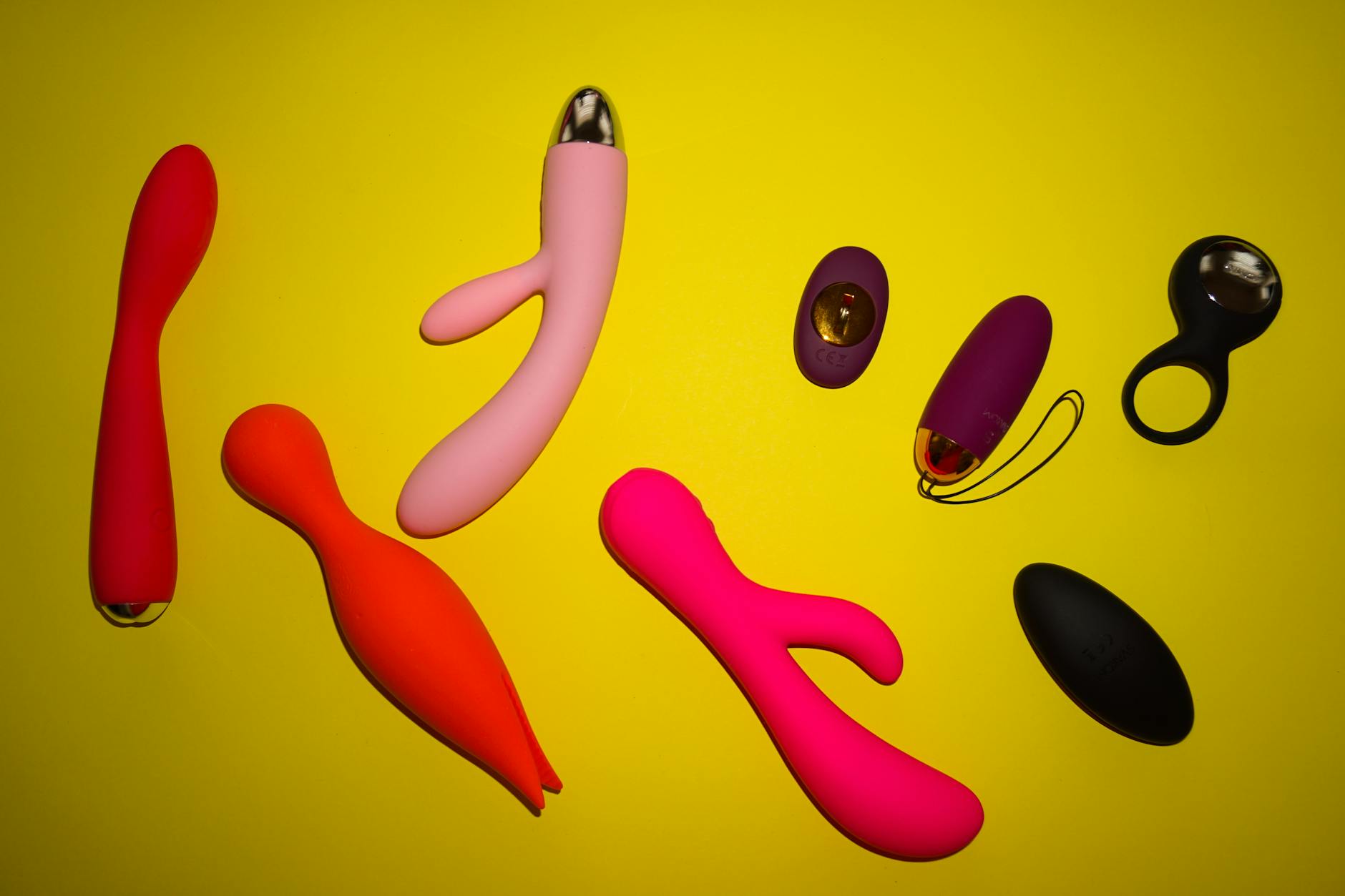
Here's the thing about lemon vibrators and partnered play
Most people think bringing a vibrator into foreplay means handing it over and sitting back. Actually, the best partnered experiences treat the clitoral vibrator as a tool you're both controlling. You can hold it, your partner can guide it, you can take turns, or you can experiment with hands-on play that feels entirely new to both of you. That's the shift from solo to shared.
It's not complicated. But it does require a conversation first, and that's where most couples trip up.
The conversation that actually works
Let's get this out of the way: telling your partner you want to use a lemon clitoral vibrator during foreplay does not have to be a formal sit-down or a text message that reads like a legal document.
The best opener? Something like: "I've been thinking about trying something in bed and I want to see if you're into it too." That invitation (not demand) sets the tone immediately. You're curious, not desperate. You're offering him or her or them a choice.
Next: be specific about the pleasure part, not the device. "I think it would feel amazing if you used a vibrator on me while we're together," not "I need a vibrator to finish." Subtext matters. Lemon clitoral vibrators are pleasure amplifiers, not fixes for problems. Frame them that way.
Third: show them. Pull up a video, an article, or just show them what the Lem looks like. Many partners worry that a vibrator is going to be intrusive or noisy or weird. Seeing that it's small, intuitive, and you're choosing it together changes the emotional temperature completely.
If your partner hesitates, curiosity beats persuasion every time. "What feels uncertain about it?" opens more dialogue than "You should be excited about this." Listen to the actual concern (worried about adequacy, worried it's a sign something is wrong, worried about the noise, worried about mess) and address that thing specifically.
How to introduce it without awkwardness
Don't pull it out mid-session when you're both already aroused. That's when people get defensive or distracted. Instead, bring it into foreplay while you're still building.
Start with your hands and mouth. Get to a place where you're both comfortable and the energy is already moving. Then pause briefly and say something casual: "I want to try something." Unwrap it (or have it already ready on the nightstand). The simplest approach is to have your partner hold it while you guide their hand, at least the first time. That's intimacy plus exploration.
Don't overthink the positioning. If you're usually face-to-face, stay face-to-face. If you prefer lying on your back, stay there. The vibrator isn't asking you to restructure the entire encounter. It's just another sensation in a sequence you already know.
Lower the intensity to start. The Lem and other quality lemon sexual toys have multiple intensity settings. Begin around pattern 2 or 3. You'll know within seconds if you want to dial it up. Your partner will see your reaction in real time and adjust accordingly. That feedback loop is what makes partnered vibrator use feel collaborative instead of transactional.
What to do with your hands while they're using it
This is the part that makes the difference between "my partner is using a vibrator on me" and "we're exploring this together."
Touch them. Your hands don't have to be idle. Run them over their chest, their back, their face, their arms. Keep the physical connection alive. That contact reassures both of you that this is still sex, not a clinical procedure.
Or guide their hand. Keep your hand on theirs and show them the pressure, the angle, the rhythm you're responding to. That's collaboration. That's them learning your body more deeply.
If you want penetration happening at the same time, you can coordinate that too. Some lemon vibrator play works best combined with other forms of touch or penetration. Communication here is just "What are you interested in?" and listening.
The key: your hands and your attention are the thing that keeps this feeling intimate.
Dealing with common worries
"Will my partner feel inadequate?" Only if you frame the vibrator as a replacement. If you frame it as something that feels different and good, and you're doing it together, most partners are genuinely interested. Some partners actually love having their hands freed up to touch other parts of your body while a toy handles one area. That's a win for both of you.
"What if I can't finish?" Then you have found useful information. You might need a different pattern. You might need a different angle. You might need more foreplay before the vibrator comes out. That's all fixable. And your partner deserves to know what actually helps.
"What if the noise bothers my partner?" Quality lemon clitoral vibrators like the Hello Nancy collection are far quieter than older models. But if noise is genuinely a concern, communicate that upfront. Some couples use vibrators during certain times of the day or when they know they have privacy. That's reasonable.
"What if I enjoy it more than partnered sex without a vibrator?" Okay, and? Your pleasure isn't a pie where adding vibration means your partner gets a smaller slice. You can both enjoy this and also enjoy other types of touch. Most people prefer variety anyway.
The second time onwards
Once you've done it once, the stakes drop dramatically. The conversation gets easier. You can experiment with different patterns, different positions, different combinations of sensations.
You might discover that your partner enjoys using a clitoral vibrator on you more than you do. You might decide it's a sometimes thing, not an every-time thing. You might build an entire repertoire around it. None of those outcomes are wrong.
Many couples also find that using a lemon vibrator together changes their understanding of what foreplay can be. It slows things down. It requires communication. It makes pleasure explicit rather than assumed. Those habits transfer to the rest of your intimate life.
A note on sensation variety
One underrated benefit of introducing vibrator play with a partner is that you both get to experience how different sensations layer. Touch with one hand, vibrator on another area, or vice versa. That's information your nervous system hadn't had before. Many people report that once they've experienced that combination, their body responds more richly to other kinds of touch too. The brain learns new pathways.
If you've read about using lemon clitoral vibrators on your own and you're now curious about the partnered side, that's a natural progression. You know what you like. You're just inviting someone you trust to be part of that discovery.
FAQ: Lemon vibrators and partnered foreplay
How do I know if my partner will be receptive to using a vibrator together?
The simplest test is curiosity. Ask them. "Have you ever thought about using a vibrator during foreplay?" Listen without judgment. Most partners either say yes, I'm open to it, or I'm not sure, which is an invitation for more conversation. If your partner says no, that's also valid, and pushing usually backfires. Respect that boundary and revisit it only if they bring it up again.
What if my partner wants to use a vibrator on themselves while we're together?
That's a form of partnered play too. Some people prefer to control the pressure and angle themselves. Your role is engagement. Pay attention. Touch them. Stay present. This isn't less intimate than you controlling the toy. It's a different kind of intimacy.
Can we use a lemon sexual toy if my partner finds the concept embarrassing?
Yes, but the conversation comes before the toy. Embarrassment usually means something specific: fear of judgment, worry that it means something is wrong, worry about performance. Address the actual worry. Sometimes watching an educational video together or reading something together (like this article) normalizes things faster than a one-on-one conversation does.
How do I bring this up without making it seem like I'm unhappy with our current sex life?
Frame it as addition, not correction. "I want to explore more kinds of pleasure with you" is different from "Our current sex life isn't working." One is about curiosity and abundance. The other is criticism. Use the first framing. Mean it.
Is it normal for partnered vibrator play to feel awkward the first time?
Completely. You're introducing a new object, a new conversation, new sensations, all at once. Awkwardness is just unfamiliarity, not a sign something is wrong. It usually melts away by the second or third time. Give it runway. What feels clumsy the first time often feels natural quickly.
What if using a lemon vibrator together actually improves our sex life?
That's not accidental. Vibrator play requires communication, presence, and willingness to try new things. Those are all ingredients of a healthy intimate life anyway. The vibrator is just a tool that facilitates conversations and vulnerability that were probably due anyway.
The bottom line
Lemon clitoral vibrators like the Lem aren't solo-only tools. They're rich territory for partnered exploration if you approach them with curiosity instead of assumption. The conversation matters more than the device. The willingness to communicate about pleasure matters more than technique.
If you're currently navigating desire gaps or arousal changes with a partner, this is also worth exploring together. For more context on how vibrators can help with those specific challenges, our guide to desire gaps in longer relationships digs into the dynamics at play.
Your pleasure deserves collaboration. And most partners are far more open to that collaboration than you think, if you ask clearly and keep the conversation warm.
Photo by FounderTips on Pexels