Let's talk about arousal that takes time
Here's the thing nobody tells you: arousal isn't a light switch. For some people, especially as you get older or after major life shifts, it's more like a dimmer. You don't flip on and suddenly feel ready. Instead, you ease up gradually, and that gradient takes longer than it used to.
That's not a problem. It's just different. And if you've been told to just relax or that something's wrong with you, I want to be direct: that advice isn't helpful, and it's often wrong.
Why arousal slows down (and it's not what you think)
There are four main reasons arousal takes longer. Understanding them changes how you approach your solo time or partnered sex.
Hormonal shifts. Estrogen and testosterone influence how quickly your nervous system responds to stimulation. After 35, or after menopause, or during certain phases of hormonal birth control, that response naturally takes longer to activate. It's not weakness. It's biology.
Stress and cognitive load. If you're managing a relationship, work, family, or grief, your brain is partly occupied even when you're trying to focus on pleasure. Mental space for arousal gets crowded. Your nervous system can't flip into pleasure mode when part of it is still managing email or tomorrow's schedule.
Relationship patterns. In longer relationships, the novelty and urgency that once triggered quick arousal fades. That's normal. It also means you need something different to warm up now than you did ten years ago.
Pelvic floor tension. Anxiety, pelvic floor weakness, or chronic tension can slow the physical cascade of arousal. Your tissues need more activation, more time, and more support to warm up fully. Suction devices like lemon vibrators work particularly well here because they don't require the intense friction that can feel overwhelming on tense tissue.
How lemon vibrators fit into longer warm-ups
This is where suction toys shine. Unlike vibration alone, which works best on already-aroused tissue, a lemon clitoral vibrator uses gentle suction combined with subtle pulse patterns. That combination activates arousal at a lower energy level.
You can start a lemon vibrator at pattern one or two before your body feels fully ready. You don't need to wait until you're already 80 percent aroused to get pleasure. Instead, you can begin gently at 20 percent arousal and let the toy help build from there.
This is a game-changer if you're used to feeling like you need to be "warmed up enough" before a toy makes sense. With lemon toys, the toy IS part of the warm-up. You're not trying to catch up to where you think you should be. You're starting where you actually are.
The practical routine for slow-building arousal
If arousal takes you 20 to 40 minutes instead of five, here's how to structure solo time so it feels intentional instead of frustrating.
Step one: Create actual space. Not just physical space, but mental space. Put the phone in another room. Tell your partner you need 30 to 45 minutes and close the door. Don't try to pleasure yourself while half-listening for texts or planning dinner. Your nervous system won't cooperate.
Step two: Start with sensation, not goal. Spend five minutes without the toy. Touch your neck, your breasts, your inner thighs, your lower belly. Pay attention to what feels good right now, not what felt good last week. Your body changes. What lit you up on Tuesday might feel different on Thursday.
Step three: Introduce the lemon toy early. Don't wait until you feel "ready." Start when you feel curious. Put the toy on a low setting, usually pattern one or two. Many people find that holding a lemon vibrator against the labia (not directly on the clitoris yet) for two to three minutes feels good before direct clitoral contact. This is your warm-up. Let it happen.
Step four: Move through intensities slowly. Increase the intensity every three to five minutes, not every 30 seconds. Your arousal will track the intensity, but only if you give it time. Jumping from pattern two to pattern five makes everything feel less sensitive, not more.
Step five: Stay present between bumps up. Notice what happens at each level. Does your breath deepen? Does your pelvic floor relax? Do you feel a shift in what's pleasurable? Most people get distracted and jump intensity again. Staying with it for a few minutes lets your body actually respond.
The whole process might take 25 to 35 minutes for solo play. That's not wasted time. That's your actual arousal.
When you're using a lemon vibrator with a partner and arousal is slow
This is trickier because you need to communicate without killing the mood. Here's what works.
Before you're even in the bedroom, mention that you need longer to warm up these days and you want to use a toy to help. Not because something's wrong, but because it works better. If your partner gets tense about toys, here's the frame that often helps: the toy is helping you get to the place where you can fully enjoy them. It's not replacing them. It's a bridge.
When you do use it together, start the toy early in foreplay, maybe even before your partner is touching you. Let them watch you use it for a few minutes. Many partners find that less threatening than them trying to judge whether you're aroused enough yet.
If you're on top or in a position where you can hold the toy, use it during sex itself. Some people do this between their body and their partner's, some press it against the side. The point is, you're not waiting to be aroused enough. You're building arousal actively, together.
The emotional part matters as much as the mechanics
Here's something I see clinically all the time: when arousal slows down, people blame themselves. They think they're broken or they're not attracted anymore. Usually, it's neither. But the shame creates performance anxiety, which creates more slowness, which creates more shame.
A lemon clitoral vibrator actually interrupts that loop. It removes the "am I doing this right, am I aroused yet" voice. You're using a tool. The tool works. Your body can relax and actually feel something instead of performing.
That shift from performing to feeling is often more important than the orgasm itself. When you're present and relaxed, your body remembers how to respond. When you're anxious about arousal taking too long, your body gets more tense and it takes even longer.
Practical troubleshooting
If you're using a lemon vibrator and arousal still feels stuck, check three things. First, is your pelvic floor actually relaxed? Slow arousal often lives in chronic pelvic tension. You might need to do a few breathing cycles or pelvic floor stretches before the toy even comes out. Second, do you actually have uninterrupted time and mental space? You can't build arousal in 10 minutes between tasks. Third, are you comparing your warm-up timeline to someone else's or to your own past? Let it be what it is now.

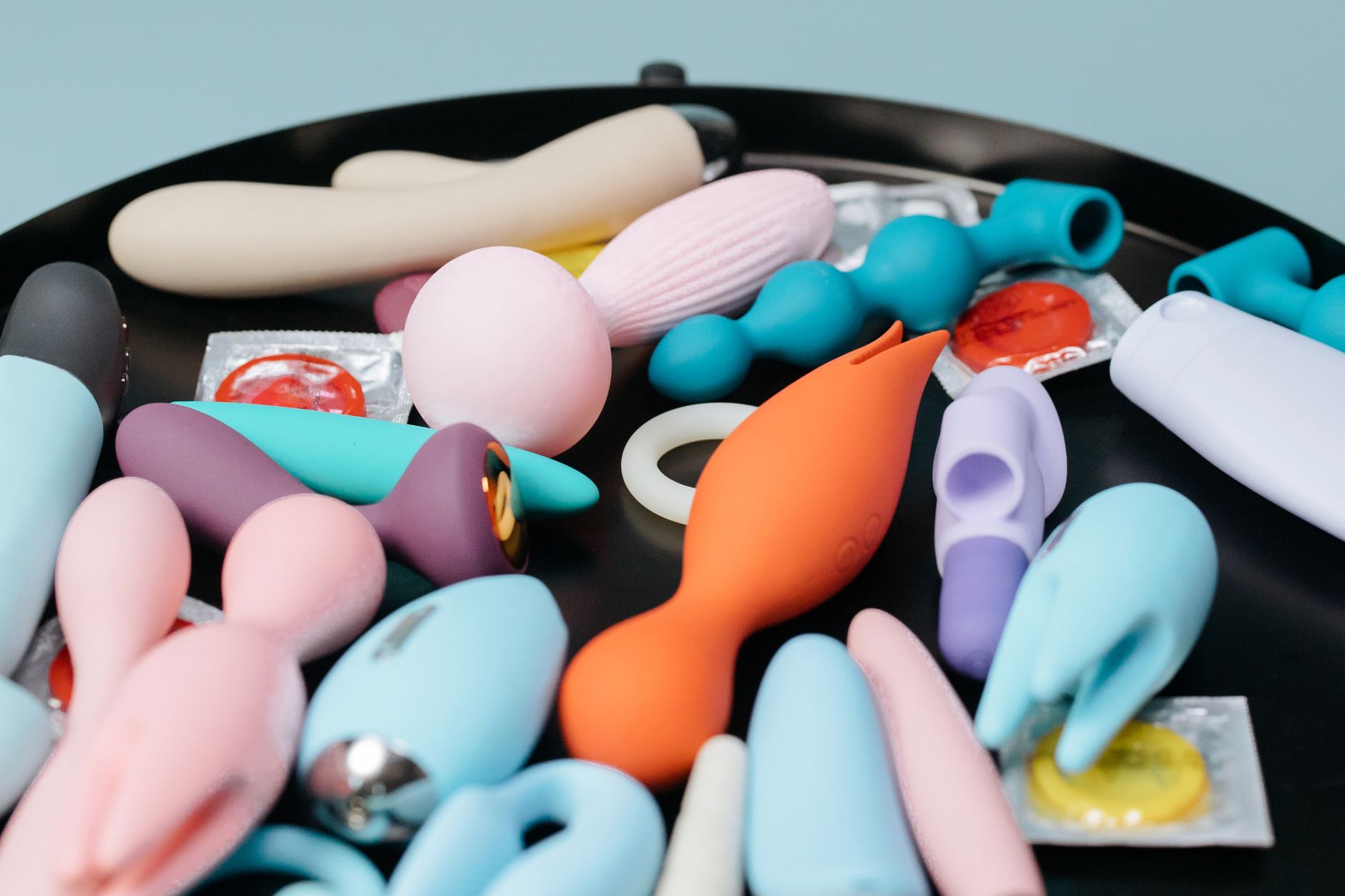
Photo by Madison Inouye on Pexels
Why suction works better than traditional vibration for slow arousal
Traditional vibrators can feel too intense or too direct when you're not fully aroused yet. The sensation jumps quickly from nothing to overwhelming, and there's no middle ground. Suction toys like the lemon vibrator give you that middle ground. They provide sustained, rhythmic stimulation that activates arousal gradually. You can stay at a comfortable level for as long as you need, then increase when your body is ready, not when a timer says you should be.
This is especially helpful if you're using a lemon vibrator when you have a sensitive clitoris. The suction spreads stimulation across a wider area, so you get pleasure without intensity overload. Same logic applies to slow arousal: the suction gives you access to pleasure at lower thresholds.
How this ties into partner dynamics
If you're in a relationship where arousal mismatches are creating tension, slow warm-up time can actually become a connection point instead of a problem. When you use a lemon vibrator during foreplay, your partner gets to slow down too. They're not trying to figure out whether you're ready yet. They're watching you explore. That creates intimacy in a different way.
Many couples find that partner-assisted warm-up time, where one person uses a lemon clitoral vibrator while the other provides non-genital touch or just presence, actually deepens their connection. It's slow. It's focused. There's nowhere to rush to.
The bottom line
Arousal that takes 30 minutes instead of five isn't something to overcome. It's something to work with. A lemon vibrator helps you do that by removing the pressure to be "ready enough" and letting you actually participate in your own arousal. You start where you are, not where you think you should be, and you build from there.
If you haven't tried this approach yet, give yourself permission to spend the time. Your arousal deserves it.
People also ask
Why does my arousal take so much longer now than it did when I was younger?
Arousal speed is driven partly by hormones (estrogen and testosterone affect nervous system sensitivity), partly by stress and mental load, and partly by familiarity (novelty triggers faster arousal in new relationships). None of these are personal failings. They're just how bodies and brains work at different life stages. If slow arousal is new for you, it's worth checking in with a doctor to rule out thyroid issues or medication side effects, but for most people, it's just a natural shift.
**Can a lemon vibrator actually help if I'm struggling with arousal?
Yes. A lemon clitoral vibrator gives you a way to access pleasure at lower arousal thresholds. You don't need to be "ready" first. The toy helps create readiness. This is different from traditional vibrators, which often work better on tissue that's already somewhat aroused. Suction provides a gentler entry point.
**How long should I actually spend warming up before things feel good?
There's no right answer, but 20 to 40 minutes is common for people with slower arousal. Don't use a timer. Instead, notice what's happening in your body. Are you starting to feel sensation differently? Is your breathing changing? Is your pelvic floor relaxing? Those are the signs that arousal is building, not the clock.
**Is slow arousal a sign something's wrong with me or my relationship?
Not necessarily. Slow arousal happens across healthy bodies and healthy relationships. It can show up after stress, hormonal changes, new medications, or just years together. If it's new and accompanied by low desire overall, talk to a doctor. If it's just slower warm-up time but desire is still there, that's usually just a pattern shift, not a red flag.
**Should I tell my partner if I'm using a lemon vibrator to warm up?
Yes, especially if you're in an ongoing sexual relationship. You don't need to make it a big thing. Something like, "My body takes longer to warm up now, so I'm going to use a toy during foreplay" is straightforward and matter-of-fact. Most partners appreciate knowing what's happening rather than guessing.
**Can I use a lemon vibrator with a partner even if they find toys intimidating?
Absolutely. Frame it as a tool that helps you get to where you can enjoy them more, not something that replaces them. Start by using it solo or during foreplay before any partner contact. Let them observe without feeling like they need to compete with the toy. Many people find that watching their partner use a toy is actually less threatening than they expected. If intimidation persists, you might work through that separately, but most of the time, exposure and communication shift the dynamic.
References and sources
This article draws on clinical experience, peer-reviewed research on sexual response cycles (Masters and Johnson, Basson), and contemporary work on relationship sexuality and aging. Key concepts include:
- Basson, R. (2000). The female sexual response: a different model. Journal of Sex & Marital Therapy.
- Studies on arousal and pelvic floor tension from the International Society for Sexual Medicine.
- Clinical research on sensation and suction-based stimulation from sexual health practitioners.
- Relationship research on desire gaps and partner communication during intimate transitions.
If you'd like to explore more about arousal, pelvic floor health, or partnered sexuality, reach out to Hello Nancy or visit our FAQs for more resources.