
Here's what no one tells you about one-sided pleasure
Let's be real. You've been having sex where someone else's orgasm is the finish line, and yours is... optional. Maybe it happens sometimes. Maybe it never does. Either way, you've learned to make their pleasure the priority, and somewhere along the way, your own became negotiable.
This isn't about blame. It's about a pattern that's so common it's almost invisible.
Why this happens in relationships
One-sided pleasure rarely starts as intentional neglect. Usually it's a mix of things. Sex education that taught you female pleasure was complicated or less urgent. A partner who finishes first and assumes you're done. The cultural message that your satisfaction is a bonus, not a baseline. Anxiety that speaking up might embarrass someone or hurt the dynamic. Over time, you stop asking for what you need, and your partner stops thinking to offer it.
The research backs this up. Studies on sexual satisfaction consistently show that people with vulvas report lower orgasm rates during partnered sex than their partners do. But here's the important part: that gap isn't biological. It's behavioral. It closes quickly when there's intention and tools.
Lemon vibrators are one of those tools.
Why clitoral vibrators shift the balance
When pleasure has been one-sided, your body might have learned not to ask. Air-pulse lemon vibrators like the Lem work differently than hands or friction alone. They're consistent, they don't depend on timing or someone else's attention span, and they create a baseline of sensation that's entirely yours.
More importantly, they make the conversation unavoidable. You're not asking someone else to prioritize your pleasure. You're showing them what prioritizing yourself looks like. That's a different message entirely.
Clitoral vibrators also compress the time it takes you to reach orgasm, especially if you've been in a pattern where sex is rushed or your arousal gets sidelined. When you can reach satisfaction in a sustainable timeframe, it stops feeling like a luxury and starts feeling like a basic part of the experience.
How to introduce this without it feeling like a criticism
The framing matters. This isn't about your partner failing you. It's about discovering something together.
Start the conversation outside the bedroom, not during sex. Say something like: "I've been thinking about how we could both enjoy sex more. I want to explore using a vibrator during our time together. I'm curious what you think." Notice you didn't say "because you don't make me come." You said you want to enjoy sex more, which is true and which he probably wants too.
Let them ask questions. Some partners worry that toys mean their body isn't enough. That's insecurity, and it's worth addressing directly but gently. The research is clear: vibrators don't replace partners. They enhance the experience for both people. When one person reaches satisfaction, the other person is usually more present and less focused on performance anxiety.
The first time you use a lemon clitoral vibrator together, keep it simple. You could use it during foreplay so he's still involved. You could use it during penetration if that's something you do. You could use it while he's still inside you or just beside you. The specifics matter less than the message: your pleasure is part of this now.
The practical setup that actually works
If you're new to using vibrators in partnered sex, here are the logistics that help.
First, water-based lubricant is your friend. Even if you don't think you need it, the vibration works better with a thin layer of lube. It also reduces friction if there's any sensitivity.
Second, start on a lower intensity setting. You might use pattern 1 or 2 on the Lem to begin, especially if you're used to less direct stimulation. You can always turn it up, but you can't un-startle your nervous system.
Third, build in time. One-sided patterns often developed because sex was rushed. If you're introducing a vibrator, give yourself 15 to 20 minutes minimum. That includes foreplay, arousal time, and the vibrator itself. It's not wasted time. It's the point.
Fourth, be clear about what you want from your partner while you're using it. Do you want them to touch you somewhere else? Be still and just watch? Keep things moving? Different things work on different nights, and that's fine. But vagueness usually defaults back to the old pattern.
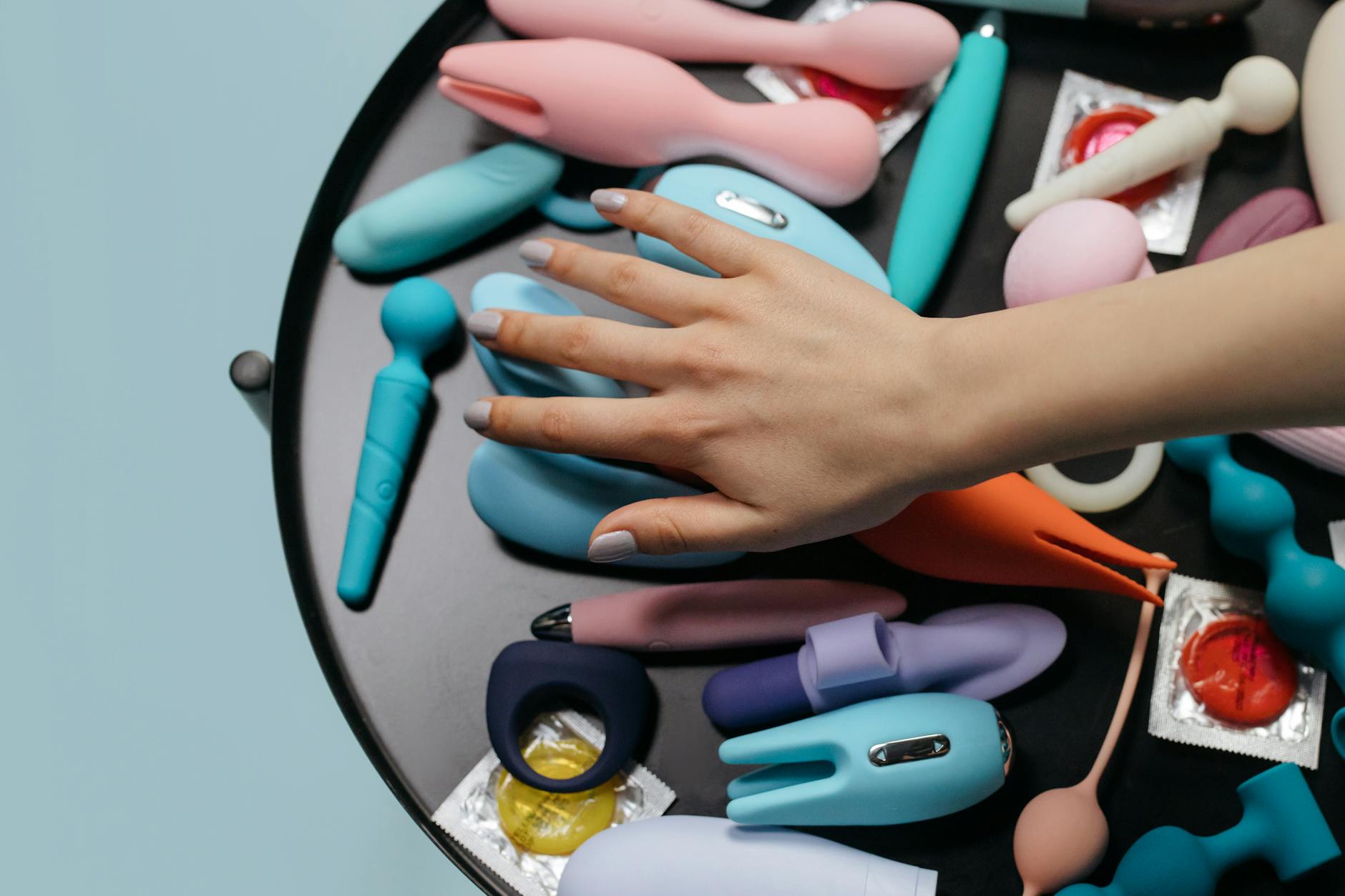
Photo by cottonbro studio on Pexels
What happens after you start using them
Three things usually shift.
First, you'll probably have more orgasms. This isn't subtle. Your partner will notice. And when they realize they can be part of that experience instead of sitting on the sidelines, the dynamic changes. Suddenly your pleasure is visible and real instead of theoretical.
Second, your anxiety about sex tends to drop. A lot of the pressure in one-sided sex comes from performance. If I can't come easily, there's something wrong with me. If I can't come, he'll lose interest. With a vibrator, you're removed from that story. You're in control of your own satisfaction. That shift in agency is worth as much as the physical sensation.
Third, your partner usually becomes more engaged. This might sound counterintuitive. Shouldn't adding a toy make them less necessary? In practice, the opposite happens. When sex isn't all about his orgasm, there's space for actual presence and creativity. People who initially resisted vibrators often become their biggest fans once they see how much better sex becomes for everyone.
When one-sided pleasure is a symptom of something bigger
Here's the hard part. Sometimes one-sided pleasure isn't just about mechanics. It's about control, or disrespect, or a partner who genuinely doesn't care about your experience. A vibrator can't fix that.
If you bring up your pleasure and your partner dismisses it, mocks it, or refuses to engage, that's a relationship problem that needs more than a toy. Consider working with a couples therapist who specializes in sexual dynamics. One-sided pleasure that coexists with dismissal of your needs is a sign of a bigger pattern that deserves real attention.
But if your partner just hasn't thought about it, or falls back on old patterns out of habit, a lemon clitoral vibrator is exactly the right nudge. It's a concrete way of saying: this matters, and I'm taking it seriously.
The first time you use it solo
Before you introduce it to your partner, you might want to explore alone. This serves two purposes. One, you'll know exactly what feels good and what doesn't. Two, you'll feel less self-conscious the first time it happens together.
Set aside 20 minutes when you won't be interrupted. Start with the lower settings and gradually explore. Notice what makes you want to slow down, speed up, or change patterns. Notice how your body responds as arousal builds.
When you bring this experience into partnered sex, you're not learning your pleasure in real time. You already know it. That confidence changes everything.
Reclaiming your pleasure is reclaiming your voice
One-sided pleasure in relationships is almost never about sex alone. It's about who gets to ask for what they want, whose satisfaction matters, and whether you believe your own needs are worth the conversation. A lemon vibrator doesn't solve relationship inequality. But it does force the conversation, and it proves to your body that your pleasure isn't optional. That belief shift is where real change starts.
You deserve orgasms. You deserve presence. You deserve a partner who thinks your satisfaction is as important as theirs. A vibrator is one way to start asking for all of it.
Common questions about one-sided pleasure and vibrators
How do I tell my partner I want to use a vibrator without making them feel inadequate?
Frame it as addition, not replacement. "I want us to explore more ways to feel good together" lands differently than "I can't come from what we're already doing." The first invites collaboration. The second invites defensiveness. Your partner's feelings are valid, but they're not your responsibility to manage. You're allowed to want your own pleasure, and you can be kind about it at the same time.
What if my partner says no?
That's important information. A partner who refuses any exploration or expansion of your pleasure is showing you something about how they value your satisfaction. You can have one conversation about it. You can explain why it matters to you. But ultimately, you get to make choices about your own body. If someone can't accept that, reconnecting with your own desires might be the first step.
Does using a vibrator during sex make it less intimate?
Intimacy isn't about which tools you use. It's about presence, attention, and mutual care. Sometimes couples report that using a vibrator together actually deepens intimacy because there's less performance anxiety and more genuine connection. But that depends on the conversation you have about it.
If I use a vibrator, will I become dependent on it?
No. Your body doesn't forget how to respond to other kinds of touch. What might happen is you realize how much more pleasurable sex is when your satisfaction is actually prioritized. That's not dependence. That's preference. And preferences are allowed.
Can I use a lemon clitoral vibrator if I've never used toys before?
Absolutely. The Lem is designed to be intuitive. Start on the lowest pattern, use lubricant, and give yourself time to explore. If you're starting with air-pulse stimulation for the first time, the sensation feels very different from traditional vibration. That's usually a good thing.
What if I use a vibrator and still don't come?
That's worth investigating with a healthcare provider or a sex therapist. Sometimes pleasure requires more than a tool. It requires addressing deeper patterns around anxiety, disconnection from your body, or relationship dynamics that make you unsafe. But a vibrator is a good starting point for understanding what your baseline response actually is.