Let's start with the thing nobody says out loud
After 8, 12, maybe 15 years with the same person, desire doesn't die. It doesn't even really fade. It just gets crowded out by everything else. There's the mortgage conversation, the sick kid, the work stress you're both carrying, the fact that you haven't been alone together in weeks. Desire requires oxygen. When you're drowning in logistics, it suffocates.
Then one day you realize you can't remember the last time you wanted your partner. Not wanted to have sex with them out of obligation or because it's been a while. Actually wanted them. And that realization is terrifying because it feels like proof that the spark is gone.
It's not. Sparks don't go out. They get covered in ash.
Why desire actually disappears (it's not what you think)
Here's what I've seen across decades of couples therapy: desire in long-term relationships doesn't die from boredom. It dies from disconnection.
When you're living parallel lives instead of intersecting ones, when sex becomes another task on the to-do list instead of a conversation between two bodies, when you stop being curious about each other's pleasure and start just going through the motions, desire has nothing to attach to. It's not the repetition that kills it. It's the invisibility.
Your partner stops asking what you want. You stop volunteering it. Sex happens the same way every time because you've both given up on trying. After enough cycles of this, your body stops responding at all. Your nervous system decides it's not safe to be present, vulnerable, or excited in that context anymore.
That's not low desire. That's a smart system protecting itself.
The solo piece that nobody talks about in couples therapy
Here's the paradox: the way to rebuild desire in partnership often starts alone.
When you've spent years showing up in bed in a half-present way, your body learns that context means autopilot, not sensation. Your nervous system has learned that this is work, not play. To rebuild desire with your partner, you have to first rebuild desire full stop. And that usually means rediscovering what pleasure feels like when there's no one else involved, no one else's satisfaction to manage, no one else's timeline to match.
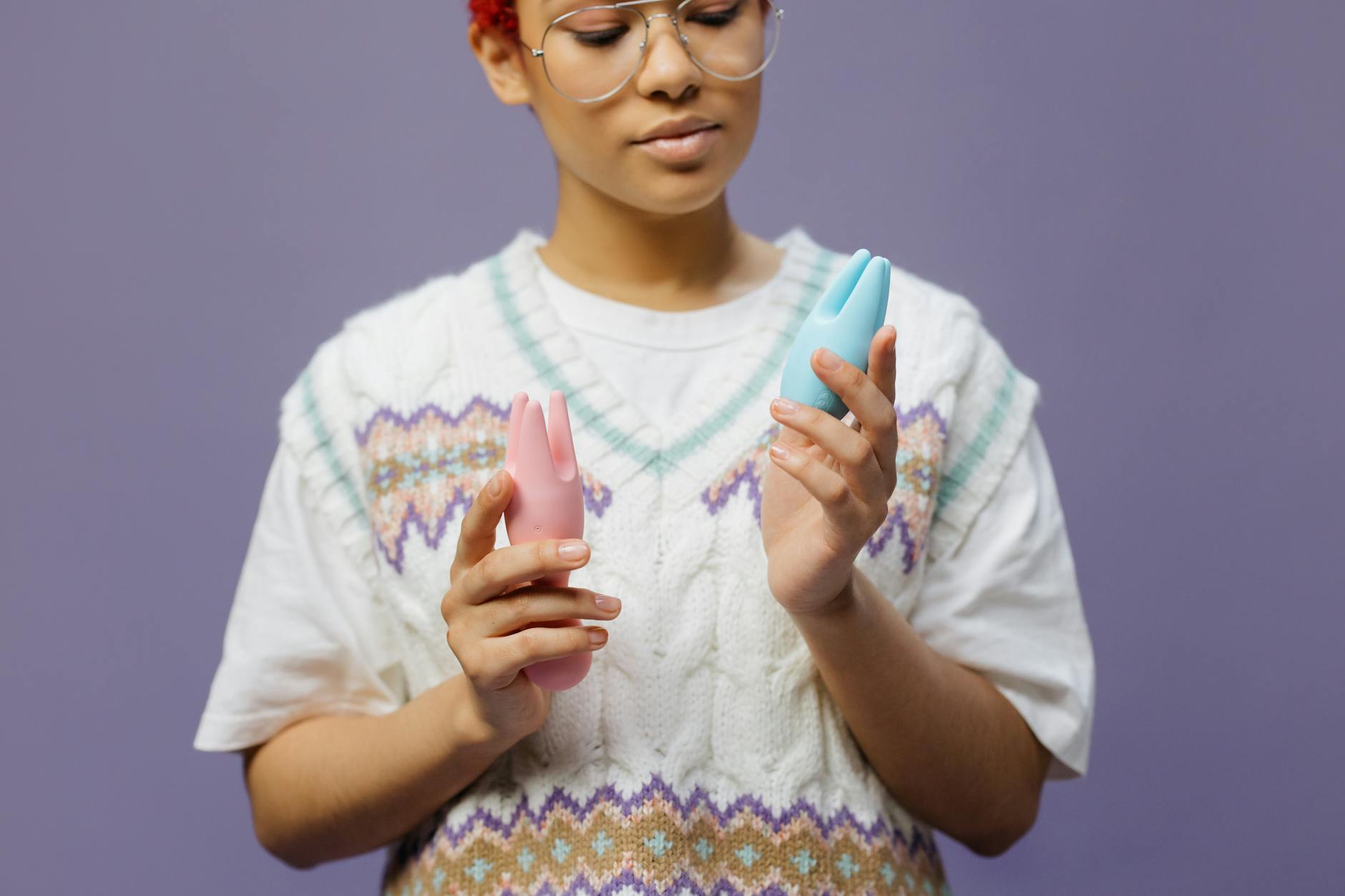
This is where a lemon vibrator changes things. Air-pulse clitoral vibrators like the Lem work particularly well for this reclamation because they're gentle enough to rewaken dormant sensation without being overwhelming. They're also radically different from partnered sex, which means your nervous system gets to learn that something called "excitement" can exist in this relationship too.
When you use a clitoral vibrator solo, you're not trying to prove anything or perform anything. You're just exploring what feels good. That's revolutionary after years of sex that felt more like checking a box.
How to start solo if you haven't in years
Four things I tell people who are starting from scratch.
First: schedule it. I know that sounds sterile. But a few things happen when you pencil in solo time. You signal to yourself that your pleasure matters enough to protect. Your partner (if they know) sees that you're taking this seriously. And you get to arrive with anticipation instead of squeezing it in while brushing your teeth.
Second: stop waiting to be in the mood. Desire is not something you feel first and then act on. It's something you act on and then feel. Show up with curiosity instead of horniness. The arousal follows.
Third: start at the lowest setting. If you're using a lemon vibrator for the first time after years of nothing, your clitoris might be sensitive in unexpected ways. Pattern 1 feels like nothing. Pattern 2 is where most people start. Give yourself three sessions at each level before moving up. Patience here pays off.
Fourth: don't rush to orgasm. This is the hardest instruction for people who've been in long-term relationships because you've learned to think of pleasure as a destination, not a journey. Spend 15 minutes just noticing sensation without trying to get anywhere. What does the vibration feel like on the outer part? The inner part? What patterns make your breath change? Orgasm might come. It might not. Both are fine.
When solo isn't the goal; rebuilding with your partner
Solo pleasure is the foundation. But if you want desire to exist in partnership again, you have to do something harder: you have to talk about it.
Not about whether you want more sex. That conversation usually just lands as pressure. You have to talk about the fact that you both stopped being curious, that you're both stuck in a pattern that doesn't work anymore, that you both deserve better.
Many couples find that introducing a lemon vibrator together resets the whole conversation. It's not about one person being broken or not enough. It's about saying, "Hey, we both got lost here. Let's try something different. Let's remember what this can feel like."
If you're introducing a clitoral vibrator to partnered sex after not using one before, frame it as exploration, not replacement. A lemon vibrator is not a substitute for your partner. It's an addition. It's a tool that can create sensations neither of you can create alone. It can actually deepen connection if both people see it as something you're trying together, not something one person is doing to the other.
The specific mechanics that help with long-term fatigue
Three things about how lemon vibrators work that matter for rebuilding desire in tired relationships.
Air-pulse technology doesn't require the same intensity. Traditional vibrators rely on speed and intensity. After years of routine sex with low presence, your body needs something gentler first. Air-pulse stimulation (like what the Lem delivers) works through suction, not vibration. It feels completely different. New. Your nervous system doesn't have a trauma response to it because you have no history with it.
Pattern variation keeps your brain engaged. Lemon vibrators come with multiple patterns. Switch between them. This isn't about chasing a bigger orgasm. It's about keeping sensation novel, which is what rebuilds desire. Your brain shuts down when it gets bored. Novel input wakes it up.
Build-up time trains arousal back in. Spend time on patterns 1 and 2 before going to 3, 4, 5. This teaches your body that pleasure has a gradient. After years of either-off-or-on sex, this is paradigm-shifting. You remember that arousal is a process, not an on/off switch.
The conversation with your partner about what's changing
If you're rebuilding desire in a partnership, your partner needs to know something is shifting. Not because they have to participate every time. But because a sudden return of interest in pleasure might feel confusing to someone who's been in flatline mode too.
You can say something like: "I realized I stopped paying attention to my own pleasure, and that affected how I showed up with you. I'm working on that. It might mean I want to explore some things differently." You don't need permission. But you do need to make sure they're not blindsided.
If your partner responds with relief, enthusiasm, or curiosity, you've got room to explore together. If they respond with defensiveness or withdrawal, that's different information. That might mean the disconnection runs deeper than just lost desire. And that might mean couples therapy makes sense.
What happens when you rebuild solo first
Something shifts when you spend a few weeks (or months) reconnecting with your own pleasure. Your confidence changes. You stop seeing sex as something that happens to you and start seeing it as something you participate in. You remember what it feels like to want. You remember your own body as a source of pleasure, not just obligation.
That energy is visible to your partner. Even if you don't say anything, they feel it. And for many couples, that's where the door opens. Not because you did anything to them. But because you did something for you.
Desire in long-term relationships doesn't come back through effort or intention or checking boxes. It comes back through curiosity, reclamation, and permission. A lemon vibrator is just a tool. But sometimes a tool is exactly what it takes to remember that your pleasure matters, and that remembering is what changes everything.
FAQ: Rebuilding desire after relationship fatigue
How long does it take to rebuild desire after years of low libido?
There's no fixed timeline. I usually tell people to expect 4-8 weeks of consistent solo exploration before they notice real shifts. But "consistent" means weekly sessions, not daily pressure. This is about rebuilding trust with your own body, not forcing it. Some people see shifts in two weeks. Some take three months. The key is consistency, not intensity.
Can a vibrator actually help if the relationship itself is unhappy?
A vibrator can help rebuild connection and communication, but it's not a fix for fundamental relationship problems. If you're unhappy in the relationship itself (not just in the sex), a clitoral vibrator might temporarily improve things, but it won't solve the underlying issue. That's when couples therapy becomes the real tool. A vibrator is part of the solution, not the whole solution.
Is it okay to use a lemon vibrator during partnered sex if my partner feels insecure about it?
Yes, but only after you've talked about it. Insecurity usually comes from fear that they're not enough or that the vibrator means something is wrong with them. You need to directly say: "This isn't about you being inadequate. This is about adding something new that we can both enjoy." If they're still not on board after that conversation, you have options: use it solo, explore it at a time when they're not present, or work with a couples therapist on why this feels threatening. But you don't have to hide your pleasure to protect their ego.
What if I rebuild my desire and my partner doesn't want to meet me there?
That's real information. Desire mismatches happen, and sometimes they're fixable (schedule more time together, try new things, rebuild emotional connection). Sometimes they're not. If you've done the work to rebuild your own pleasure and your partner is still checked out, you get to decide what that means for your relationship. You might need couples counseling. You might need to have a harder conversation about what you both need. But at least you'll know it's not your libido that's broken.
Should I introduce a lemon vibrator solo first, or jump to using it with my partner?
Almost always solo first. Your partner doesn't need to watch you figure out what you like. You need space to rediscover pleasure without an audience, without pressure, without managing anyone's feelings. Once you've spent 3-4 weeks exploring solo, you'll have much more confidence introducing it to partnered sex.
What if using a vibrator makes me feel guilty?
Guild usually means you've absorbed the message that your pleasure is selfish, or that you should only want your partner, or that toys mean something is wrong. None of those things are true. Your pleasure is part of your health. It's part of what makes you present in your relationship. If guilt comes up, sit with it for a minute. Where did that message come from? Is it actually yours, or did someone hand it to you? Reclaiming your pleasure is reclaiming permission to exist as a full person, not just a partner.
The part they don't teach you in couples therapy
Desire in long-term relationships dies quietly. You don't wake up one day with no libido. It slowly gets smaller and smaller until you don't notice it's gone. Rebuilding it is quieter still. You don't suddenly become someone who wants their partner again. You just start noticing sensation. You try a new pattern on a vibrator. You realize orgasm feels good. Your partner catches you smiling after solo time and feels curious instead of threatened. You have a real conversation instead of avoiding one.
Small things. Repetitive things. The opposite of flashy.
But after years of going through the motions, those small things add up. And one day you realize you actually want your partner again. Not because they changed. Because you remembered what wanting feels like.
If you're stuck in long-term relationship fatigue and looking for a place to start, reconnecting with your body after anxiety is often a good first step. And if you're ready to explore with your partner, understanding how to use clitoral vibrators when you want deeper connection gives you a framework for that conversation.