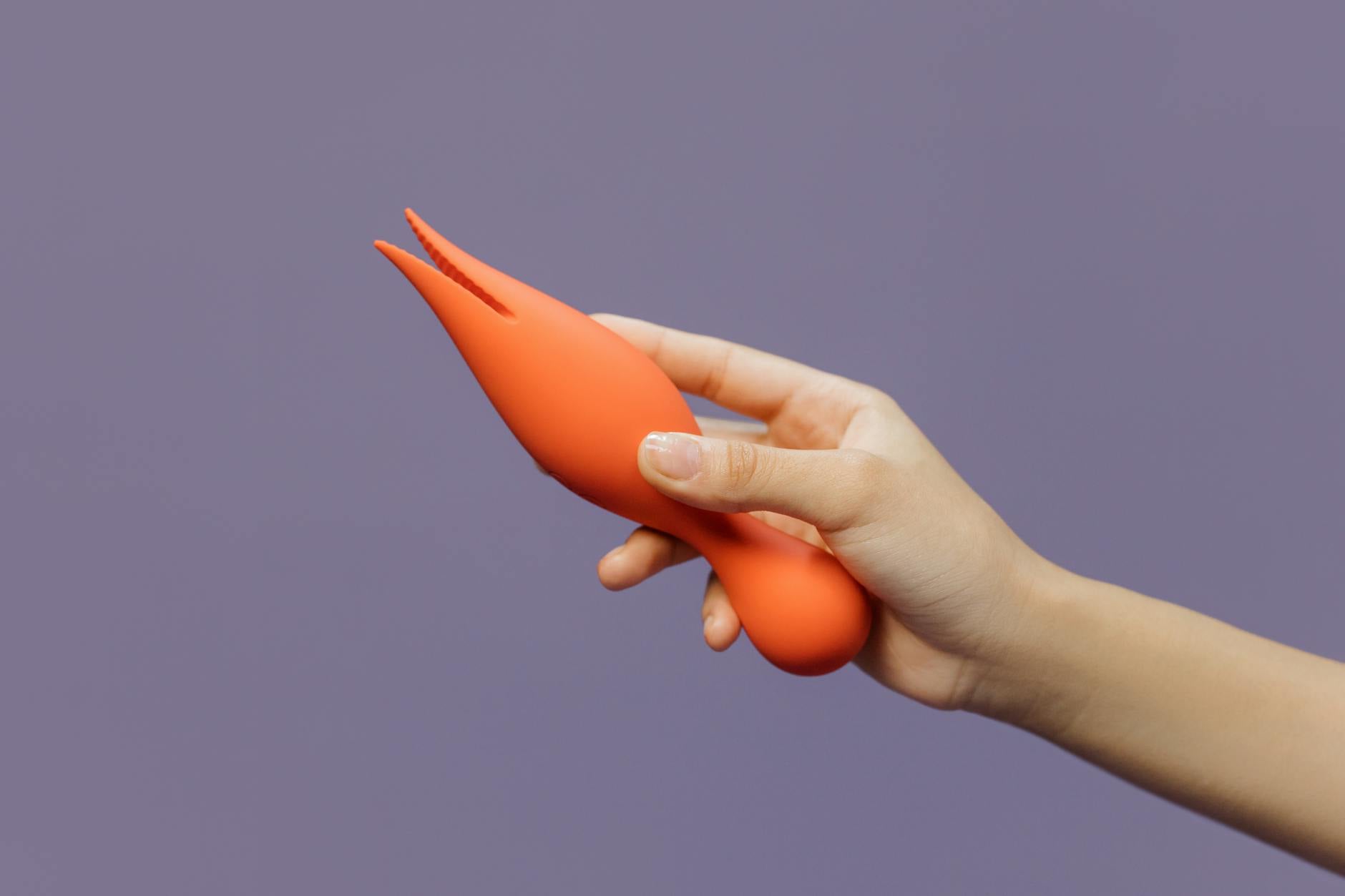
Let's talk about the guilt first
Here's the thing: if you've spent years having sex primarily with a partner, the idea of exploring solo often comes packaged with weird feelings. Guilt. Awkwardness. A nagging sense that you're somehow cheating on yourself or betraying the relationship. That's not unusual. It's also not useful.
Solo play isn't a substitute for partnered intimacy or a sign that something's wrong. It's information gathering. When you're alone with your body, you learn what actually feels good separate from performance, from timing, from someone else's rhythm. That knowledge makes partnered sex better, not worse.
Lemon vibrators are particularly useful for this transition because they work differently than traditional vibrators. The suction technology doesn't require the same kind of friction or intensity that can feel overwhelming if you're new to solo play. It's gentler on your body and, honestly, less intimidating psychologically.
Why solo play after partnered sex feels different
Your brain has been trained for years to sync with someone else. Even if the partnered sex was good, even if you came, your nervous system learned to navigate another person's presence, timing, and expectations. Solo play bypasses all of that noise.
There's also a sensory learning curve. When you've only experienced pleasure in one context, you often assume that's the only way it works. Solo exploration teaches you that arousal looks different in different scenarios. Your body might respond faster or slower, with more intensity or less, depending on what you're doing and where your head is.
Third, there's the freedom factor. With a partner, there's always some degree of conscious attention on them. How they're feeling, whether they're bored, whether they're watching. That divided attention actually changes your nervous system response. Alone, you can drop into genuine self-focus without guilt.
The mental setup matters as much as the physical one
Before you touch a lemon vibrator, you need to handle the permission part. This is where a lot of people get stuck. They buy the toy but never actually use it because there's an underlying belief that they shouldn't be doing this.
Honestly? Your pleasure is not a luxury. It's not a betrayal of your partner or proof that the relationship is failing. It's actually a form of self-knowledge that directly supports relational health. Partners often report that when their significant other has done solo exploration work, the partnered sex gets better, clearer, more communicative.
So before you use the lemon vibrator, do this: sit down and write three reasons why your solo pleasure matters. Not why it's okay. Why it matters. Does it reduce stress? Does it help you sleep? Does it remind you that your body is yours? Write it down. Read it when you feel guilty.
How to actually start
First time using a lemon vibrator solo, set aside about 30 minutes when you know you won't be interrupted. Not 10 minutes. 30. Because you're not trying to come fast. You're trying to learn.
Start by just holding the toy. No stimulation yet. Notice the weight, the shape, the temperature. If you've been in partnered sex for years, your body might feel slightly foreign to you in its own context. This is normal. You're rehabituating.
When you're ready, use the lowest suction setting. The Lem on setting 1 or 2 is designed to be gentle, almost conversational with your body. You're not going for an orgasm in three minutes. You're exploring sensation. Notice what feels good, what feels weird, what makes your breath change.
Here's something that surprises a lot of people: solo play might not lead to orgasm the first few times. That's completely fine. You're building a relationship with your own pleasure, not auditioning for a role.
The specific advantage of lemon vibrators for solo starters
Traditional vibrators use persistent vibration. If you're new to solo play, persistent vibration can feel either too intense or weirdly numb after a minute. Your nervous system adapts fast, and sensation flattens.
Lemon clitoral vibrators work through suction rhythms, which feel more like a pulsing or massaging sensation. It's gentler psychologically for someone transitioning from partnered sex because it doesn't feel quite so clinical or mechanical. The sensation is closer to manual touch, which your body already understands.
Also: suction toys tend to work better for people who haven't spent years in partnered sex because they stimulate a larger area of the vulva. You're not trying to find one specific spot and clench there. You're inviting your whole clitoris to participate. That distributed stimulation is often more orgasmic and definitely more forgiving if you're still figuring out what you like.
Building a sustainable solo practice
Solo play isn't something you do once to check a box. It's a practice. Here's how to make it stick.
First, set a regular rhythm. Once a week minimum, ideally more. Your brain needs consistency to drop the guilt and start actually enjoying it. When solo play is sporadic and guilt-adjacent, it stays uncomfortable. When it's normalized, it becomes genuinely pleasurable.
Second, change it up. Use the lemon vibrator one time. Use your hands another time. Watch something that turns you on sometimes, explore fantasy other times. Variety keeps your nervous system engaged and prevents adaptation.
Third, don't combine solo play with checking email or scrolling. This is meditation for your body. That sounds precious, but it's true. Your attention is the technology here. When you bring your full attention to sensation, pleasure deepens.
If you have a partner, consider telling them what you're doing. This isn't a confessional or asking permission. It's just information. Most partners are relieved. It takes pressure off partnered sex because nobody's entire sexual outlet depends on the other person showing up.
What to expect in the first month
Week one is usually awkward and exploratory. You might feel self-conscious even alone. That's fine.
Weeks two and three often involve actual pleasure discovery. Your body starts to remember that it can feel good independently.
By week four, you'll probably notice that partnered sex has shifted somehow. Maybe you're more present. Maybe you know what you actually want and can ask for it. Maybe the pressure lifted.
If you're not seeing pleasure increase by week four, it might be a mental block worth exploring with a therapist. Sometimes guilt runs deeper than a solo practice can touch, and that's genuinely okay. Professional support isn't failure. It's just a different form of learning.
The relationship with lemon vibrators grows too
Something I've noticed working with people in long-term partnerships: when someone starts solo exploration with a tool like the lemon vibrator, they often shift from seeing it as a toy to seeing it as a tool for self-knowledge.
That's powerful because it removes the shame. You're not using a vibrator because your partner isn't enough. You're using it because your body deserves focused attention. There's a totally different energy there.
Eventually, some people bring that energy into partnered sex. They'll use the lemon vibrator during partnered sex, or they'll bring solo practices into foreplay. That's usually the marker that the transition from solo-play-as-awkward-duty to solo-play-as-genuine-pleasure has landed.
Frequently asked questions
What if my partner feels threatened by me using a lemon vibrator solo?
That's a conversation worth having directly. Often, partners who feel threatened aren't actually afraid of the toy. They're anxious about what it means. Does it mean you're not satisfied? Does it mean the relationship is ending? Those are real concerns worth addressing. But here's the truth: your solo pleasure isn't about them. If they're struggling with it, that's actually a relationship issue that needs attention separate from the toy. Consider whether a couples therapist could help.
How often should I use a lemon vibrator if I'm just starting solo play?
At least once a week, ideally 2-3 times per week in the beginning. You're rewiring your nervous system's relationship to pleasure, and consistency matters. It's like any new habit. If you do it sporadically, it stays novel and slightly uncomfortable. If you do it regularly, it becomes normal and genuinely enjoyable.
Can I use a lemon vibrator if I'm still in a partnered sexual relationship?
Absolutely. Solo play and partnered sex aren't mutually exclusive. In fact, many sex therapists recommend that people in long-term partnerships maintain some solo practice because it keeps you connected to your own pleasure rather than outsourcing all arousal to the other person. It actually tends to improve partnered sex over time.
What if I don't reach orgasm with a lemon vibrator solo?
Orgasm isn't the goal of solo exploration, especially at the beginning. You're learning sensation, what feels good, what your body can do when it's just you and the toy. Orgasm will often follow once you stop chasing it. If you're three months in and still not experiencing any pleasure at all, it might be worth exploring with a sex therapist. Sometimes there are deeper blocks that need professional support.
Is it normal to feel guilt even after I start using a lemon vibrator regularly?
Yes, especially if you were raised with messages that solo pleasure was wrong or shameful. That guilt often takes time to unwind. Keep using the vibrator anyway. Your body learns first, and your mind follows. The more you engage in solo play, the more normal it becomes, and the guilt naturally fades.
Should I hide my lemon vibrator from my partner?
That depends entirely on your relationship and what feels right to you. Some couples are totally open about these things. Others prefer privacy around solo practice. Neither is wrong. The important thing is that you're being authentic. If you're hiding it out of shame rather than preference for privacy, that might be worth exploring.
You don't need permission to know your own pleasure
The transition from partnered sex to solo exploration is genuinely worth making. Not instead of partnered intimacy. Alongside it. Because your body has information that only you can gather, and that information makes everything else better. Start small, set a regular rhythm, and let the lemon vibrator be your guide. Your pleasure matters, and solo play is one of the clearest ways to prove it to yourself.