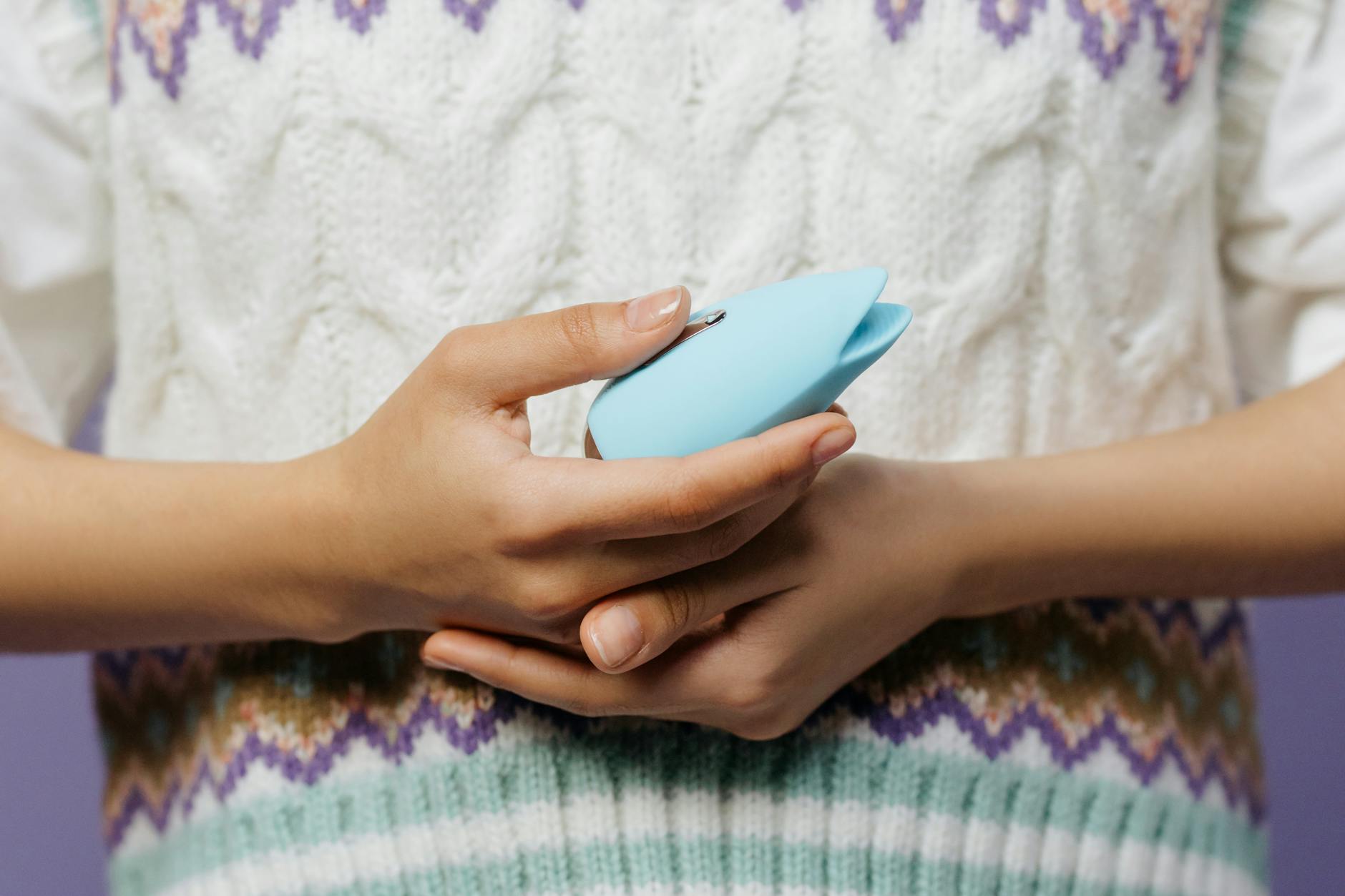
Let's talk about what actually happens to your clitoris when hormones shift
Your clitoris doesn't have a permanent sensitivity setting. Estrogen, progesterone, testosterone, and thyroid hormones all change how responsive your nerve endings are, how much blood flow reaches the tissue, and how quickly arousal builds. When any of these hormones fluctuate, your clitoris feels different. Sometimes more sensitive. Sometimes less. Sometimes wildly both depending on the day.
This isn't dysfunction. It's biology. And it's also completely fixable once you understand what's happening and adjust your tools accordingly.
Why hormonal changes make your clitoris extra sensitive
Estrogen is the main culprit here. When estrogen levels drop, the tissue around your clitoris becomes thinner and more delicate. You'd think that would make things less sensitive, but actually the opposite often happens. Thinner tissue means the nerve endings sit closer to the surface. Direct pressure that used to feel good suddenly feels sharp or uncomfortable.
Progesterone does something similar. Higher progesterone (the luteal phase of your cycle, or some forms of birth control) can make your clitoris feel hypersensitive. Some people describe it as almost raw, like the nerves are exposed and firing on low stimulation.
Thyroid hormones affect everything too. Hypothyroidism can numb sensation entirely. Hyperthyroidism can send your clitoris into overdrive. And testosterone (yes, everyone with ovaries produces it) dropping means your nervous system recovers more slowly from stimulation, which makes intense vibration feel exhausting instead of pleasurable.
The pattern: when the tissue is delicate and the nerves are primed, a lemon vibrator's gentle suction approach works infinitely better than direct vibration. You get stimulation without the shock.
The lemon vibrator advantage for sensitive tissue
Here's what makes a lemon clitoral vibrator different from other toys when you're dealing with hormone-related sensitivity.
Traditional vibrators work through direct vibration. The toy presses against your clitoris and moves back and forth very quickly. On a sensitive day, this feels like microbursts of pressure that can quickly become overwhelming or even painful.
Lemon suction vibrators, by contrast, create a gentle seal and stimulate through rhythmic suction patterns. The sensation is broader, less direct, and distributes pressure across a larger area of sensitive tissue. Instead of intense vibration at one point, you get a wave-like, pulsing sensation that builds arousal without overwhelming your nerves.
For people with hormonal sensitivity, this difference is everything. A lemon vibrator lets you get to orgasm on settings 1 or 2 instead of needing to push yourself through settings 5 or 6 on a traditional vibrator just to feel anything.
Starting over with lower intensity settings
If your clitoris has recently become more sensitive, your first instinct might be to go straight to a vibrator you've used before and crank it to the setting that used to work. Don't do that.
Instead, treat the lemon vibrator like you're exploring it for the first time. Start with the lowest setting. Most lemon vibrators have 5 to 8 settings depending on the model. Begin at setting 1. Spend at least two minutes there, and genuinely notice what's happening. Does it feel pleasurable, or does it feel like too much pressure?
Many people with hormone-driven sensitivity find that setting 2 or 3 is actually their sweet spot right now. They might have needed setting 5 or 6 before hormones changed. This isn't a step backward. It's just where your body is at the moment.
The other thing: don't skip the warm-up phase. When tissues are sensitive, blood flow matters. Spend 10 to 15 minutes on non-genital touching, self-massage, or gentle external touch before bringing in the lemon vibrator. Your clitoris will be more engorged, more ready, and way more responsive. That means you'll need less intense stimulation to build arousal.
Lubrication isn't optional with sensitive tissue
When hormones are disrupting your clitoris sensitivity, adding good lubrication is non-negotiable. Even if you're producing natural lubrication, an external water-based lube reduces friction and distributes pressure more evenly across sensitive skin.
The best approach: apply lube directly to your clitoris, not just to the toy. Use your fingers to massage it in gently, working it into the tissue around the clitoral head and the hood. This serves two purposes. One, it reduces friction when the lemon vibrator makes contact. Two, it gives you a second source of tactile pleasure that warm-ups and primes your nervous system.
If you notice irritation or rawness developing during use, that's a sign to stop, clean up, and try again tomorrow or later in the week when hormones have shifted. Your clitoris is telling you it needs more recovery time right now.
Finding your rhythm with pattern variations
Most lemon vibrators don't just have intensity levels. They also have pattern variations. A steady pulse feels different from a ramp-up pattern, which feels different from irregular waves. When your clitoris is sensitive, the right pattern matters as much as intensity.
Start exploring patterns at low intensity. Some people find that steady pulses feel too monotonous and actually need to dial up to a varied pattern to stay engaged. Others find varied patterns exhausting and want pure, simple pulsing. Sensitivity doesn't predict which you'll prefer.
The trick is giving yourself permission to switch patterns mid-session. If setting 1 with pattern A feels great for five minutes and then becomes numbing, flip to pattern B. If three minutes in you're getting overstimulated, drop down a setting or switch to a gentler pattern. Your arousal is not a failure if it needs adjustment.
Pairing lemon vibrators with partnered play when sensitivity is high
If you have a partner, hormonal sensitivity changes the conversation. Your partner might be used to intensity that used to work for you, and now lower settings are what actually gets you there. That's worth naming directly instead of leaving them confused.
Lemon clitoral vibrators are also incredibly partner-friendly when sensitivity is high. They're small, quiet, and easy to control. A partner can hold it, let you guide where it goes, and adjust intensity based on your verbal or non-verbal cues in a way that feels more collaborative than some other toys.
One useful reframe: during hormonal sensitivity windows, the lemon vibrator can be something you and your partner use together to explore what you need right now. Not a replacement for anything. Just a tool that happens to match your body's current setting.
When sensitivity spikes are a sign to pause and check in
There's a difference between "my clitoris is sensitive so I need lower settings" and "my clitoris hurts or feels raw even with gentle touch."
The second one means pause. If you're experiencing pain, sharp sensations, or rawness that persists after you've stopped, something else might be going on. Hormonal fluctuations can unmask underlying conditions like contact dermatitis, genital lichen sclerosus, or other tissue changes that warrant checking in with a doctor.
Most of the time, what people describe as painful sensitivity actually resolves with: more lube, lower intensity, longer warm-up time, and patience. But if it doesn't, that's when professional input matters. You're not broken. You might just need support figuring out what's actually causing the pain versus what's just normal hormone-driven sensitivity.
What to expect as hormones settle or shift again
Hormonal sensitivity usually isn't permanent. If you've recently started birth control, hit a new phase of your cycle, entered perimenopause, or changed medications, your clitoris will likely settle into a new normal within a few weeks or months.
Keep the lemon vibrator in your routine even as things shift. As your sensitivity normalizes, you'll probably notice you naturally gravitate toward higher settings or different patterns. That's not a sign to abandon the tool. It's just your body telling you what it needs now.
Some people find that their baseline sensitivity is genuinely lower after certain hormonal changes (like entering menopause), and a lemon clitoral vibrator becomes their consistent choice because it meets them exactly where they are. Others cycle through periods of high sensitivity and find the same vibrator works beautifully during those windows and less during others.
There is no one right way. Your job is just to pay attention, stay curious, and use the right tool at the right moment.
Frequently asked questions
Why does my clitoris feel more sensitive on certain days of my cycle?
Progesterone peaks during the luteal phase (after ovulation), and higher progesterone makes most people's clitorises feel more sensitive or tender. Estrogen is also dropping during this phase, which thins the tissue and brings nerve endings closer to the surface. The combination creates that raw, exposed feeling. Lower intensity and longer warm-up time help. Many people find that suction vibrators like lemon clitoral vibrators work better during this phase than traditional vibrators.
Can birth control change how sensitive my clitoris is?
Absolutely. Hormonal birth control prevents the hormone fluctuations that happen in a natural cycle, so your baseline sensitivity becomes more consistent. But it can also shift your baseline up or down depending on the type of hormones and dose. Some people feel more sensitive on certain pills or with certain IUD types. If your sensitivity changed when you started birth control, give your body two to three cycles to adjust. If it's still uncomfortable after that, talk to your provider about switching formulations.
Is it normal for my clitoris to feel numb if I use my lemon vibrator too much?
Yes, and it's actually protective. When you've had intense stimulation for a long time, your nervous system dials down sensitivity to protect itself. This is called habituation. It's not damage. It's temporary. If you notice numbness building, stop using the vibrator for a day or two. Engage in other forms of pleasure. Your sensitivity will bounce back. The pattern is: stop before you feel numb, and you'll avoid the recovery time.
What's the difference between clitoral sensitivity and clitoral pain?
Sensitivity = your clitoris responds quickly to stimulation and might feel more intense than usual. You can usually manage it with lower intensity, more lube, and slower warm-up. Pain = sharp, burning, or raw sensations that persist or worsen with touch. Pain often needs a conversation with a healthcare provider because it can indicate contact dermatitis, infection, or a tissue condition. Sensitivity is annoying but manageable. Pain is a signal to pause and get support.
Can hormone-related clitoral sensitivity improve without medication?
Often yes. Time, lube, lower intensity, and longer warm-up usually resolve most hormone-driven sensitivity within weeks or months. If the hormonal change is from your natural cycle, sensitivity will fluctuate and normalize each month. If it's from a medication or major life transition (like perimenopause), it can take longer, but your body usually finds a new baseline. If sensitivity persists beyond a few months or is genuinely painful, talk to your doctor.
Are lemon vibrators the only option when I have sensitivity?
No, but they're one of the best. Because suction distributes pressure broadly instead of focusing intense vibration at one point, they tend to feel gentler than traditional vibrators. Air-pulse toys and some wand vibrators on low settings can also work. The key is choosing a toy that you can use at very low intensity without it being overstimulating. Test a few options and see what your body prefers.
The bottom line
Your clitoris is not the problem. Hormones are just doing what hormones do, and your sensitivity is your body's way of asking for a different approach. A lemon vibrator's gentle suction method works beautifully when tissues are delicate and nerves are primed. Start low, use lube, warm up, and pay attention to what feels good. Your pleasure is still there. It just might look a little different right now.