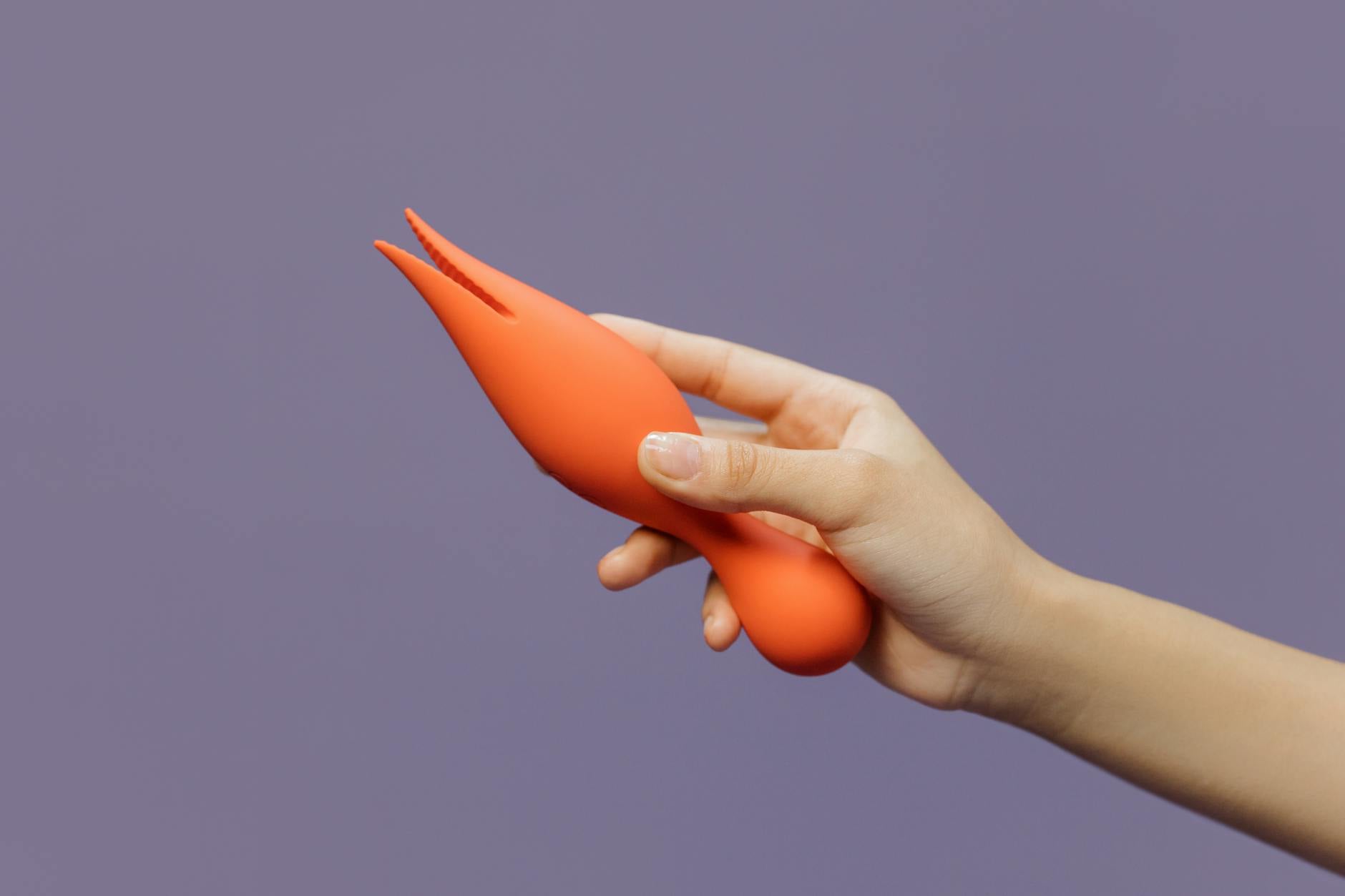
Here's the thing about foreplay
Not everyone's arousal runs on the same timeline. Some people need thirty seconds of attention and they're ready. Others need thirty minutes of building, touching, talking, exploring. Neither is wrong. Neither is broken. But if you're in the second camp, most vibrators actually work against you.
That's where lemon vibrators change the game. The reason isn't complicated, but it matters. Air-pulse stimulation, which is how lemon clitoral vibrators work, builds sensation differently than traditional vibration. It doesn't jolt your nervous system. It invites it.
If you've been frustrated by toys that either overstimulate too quickly or don't feel like much of anything, this post is for you.
Why traditional vibrators rush the experience
A standard vibrator (wand, bullet, rabbit) works by moving back and forth really fast. That gets a lot of sensation happening very quickly. For some people, that's perfect. For others, it's overwhelming, or it skips right past the slow-burn arousal that actually feels good.
When your body needs extended foreplay, rapid vibration can feel jarring instead of sensual. Your nervous system gets flooded instead of gradually primed. The result is either overstimulation (you tense up, things feel numb) or you reach climax before the rest of your body has caught up, leaving everything feeling rushed and a little empty.
Lemon sexual toys work differently. Instead of vibrating, they use gentle suction and pulsing patterns that build sensation layer by layer. It's like the difference between someone surprising you with a touch versus someone slowly, deliberately running their hand across your skin.
How air-pulse stimulation supports slow-burn arousal
Air-pulse is a fancy term for sucking and releasing in rhythmic patterns. When you activate a lemon clitoral vibrator at pattern 1 or 2, what you're feeling isn't intense buzzing. It's a soft, pulsing sensation that mimics the actual touch of a mouth. Your nervous system recognizes it as intimate contact, not just stimulation.
That recognition matters more than you'd think. When your body perceives foreplay as genuine touch rather than mechanical stimulation, it releases the right neurochemicals. Dopamine, oxytocin, serotonin. The hormones that actually build arousal over time, not just trigger a reflex.
With a lemon vibrator, you can spend fifteen or twenty minutes at low intensities, feeling pleasure build gradually without ever hitting a ceiling. By the time you increase to patterns 3, 4, or 5, your whole body is involved. You're not jumping from zero to sixty. You're easing from zero to sixty.
The practical setup for extended foreplay
If you're using a lemon vibrator solo, here's the rhythm that works best for slow-burn arousal:
Minutes 1-5: Exploration. Don't start with direct clitoral contact. Hold the vibrator against your inner thigh, your mons pubis, your labia. Feel how the sensation changes across your vulva. At this stage, you're not trying to reach climax. You're waking up your nervous system and getting curious about what feels good.
Minutes 5-10: Escalation. Bring the vibrator closer to your clitoris, but keep the intensity low. Stay on pattern 1 or 2. You're not looking for big sensations yet. You're looking for deepening pleasure. This is where patience pays off. Most people rush past this window. Don't.
Minutes 10-15: Buildout. Now you can move to pattern 3 or 4, maintaining direct contact. Your arousal should feel like it's climbing steadily, not plateauing. If it's not, stay at pattern 2 longer. There's no timer.
Minutes 15-plus: Climax or continuation. Depending on what your body needs, you can escalate to patterns 5 and 6, or you can stay in the buildout phase for another twenty minutes. Extended foreplay doesn't have to end in orgasm. It can be about the pleasure of anticipation itself.
With lemon clitoral vibrators, you have that option because the stimulation isn't aggressive. You're not fighting against the toy to slow down or speed up. You're dancing with it.
When you're with a partner and need more time
The dynamic changes slightly, but the principle stays the same. If you need extended foreplay, you have three options:
Option 1: Use a lemon vibrator together. Your partner can hold it, experiment with patterns and positioning while you guide them. The toy becomes a shared tool rather than a solo device. This is actually wildly intimate because it requires communication and patience from both people. Many couples report that the foreplay part (before even reaching orgasm) becomes their favorite moment.
Option 2: Use it yourself while your partner is present. Some people feel more comfortable managing their own arousal and rhythm, and that's completely valid. Your partner can touch you elsewhere, talk to you, or simply be present. The lemon vibrator does one job. Your partner does another.
Option 3: Use it intermittently. Touch for a few minutes, vibrator for a few minutes, back to touch. This creates rhythm and variety, which actually helps arousal build because your nervous system isn't adapting to one single sensation. It stays engaged.
The key with any partner-based foreplay is saying out loud what you need. "I need about twenty minutes of buildup." "Can we stay at a slower pace?" "I want to use the vibrator now." Partners who feel defensive about toys often just haven't been told clearly that the toy is serving the relationship, not replacing it.
Managing arousal plateaus during extended foreplay
Sometimes during long foreplay, you hit a moment where sensation feels stuck. You're aroused but not more aroused. The pleasure isn't deepening. This is normal and it's usually a sign you need a small change, not more intensity.
Change position. If you've been lying down, sit up. If you've been on your back, roll to your side. Your nervous system adapts to stillness. Movement resets it.
Change patterns, not intensity. Instead of going from pattern 3 to pattern 4, try pattern 3 with a different rhythm. Most lemon adult toys have variations within each intensity level. Explore them.
Add touch elsewhere. Your partner can squeeze your thigh, kiss your neck, or run their hand across your chest. Your clitoris isn't your only source of arousal. Your whole body is.
Breathe differently. Seriously. Most people unconsciously hold their breath during arousal. Slow, deep breaths actually increase blood flow and sensation. Try exhaling longer than you inhale.
Common mistakes that derail slow-burn foreplay
Mistake 1: Jumping straight to high intensity. You bought a lemon vibrator. You're excited. You start at pattern 5. Your body says "okay, we're doing this" and rushes toward climax. Then it's over and you feel unsatisfied. Start low. Always.
Mistake 2: Using it every single time. If you use the vibrator for every solo session, your body calibrates to it. When you're with a partner and don't use it, everything feels slow. Alternate. Some sessions with the toy, some without. Your nervous system stays sensitive to variation.
Mistake 3: Expecting the same result every time. Some days your body needs five minutes. Some days it needs fifty. That's not failure. That's biology. Stop fighting it and start working with it.
Mistake 4: Not lubrication. Even if you produce lubrication naturally, adding a water-based lube makes everything feel smoother and less friction-y. That smoothness is actually better for extended arousal because there's no irritation to pull your focus.
Why this matters for long-term pleasure
If you've spent years being rushed (by partners, by your own impatience, by toys designed for quick climax), slow-burn foreplay can feel like a completely different experience. You might discover that your most intense orgasms actually come after extended buildup, not despite it.
More importantly, you reclaim the right to your own timeline. You're not trying to be "normal." You're not trying to climax in five minutes because that's what you think you should do. You're following your body's actual rhythm and discovering what actually feels good.
Lemon clitoral vibrators support that because they don't impose a pace. They invite one. The difference is everything.
Frequently Asked Questions
How long should extended foreplay actually take?
There's no "should." Some people hit their best arousal in ten minutes. Others need thirty or forty. What matters is that you have a toy and a partner (or just yourself) who won't pressure you to rush. A lemon vibrator at low intensity means you can take whatever time you need without overstimulating. Track your own patterns. You'll start noticing what duration actually works for your body.
Can I use a lemon vibrator for extended foreplay if I'm mostly numb down there?
Yes, actually. Air-pulse stimulation often works better for people with reduced sensation because it creates broader, gentler stimulation compared to traditional vibrators. The suction sensation activates nerve endings that might be less responsive to buzzing. Start at pattern 1 and give your body time to wake up. This sometimes takes longer than you'd expect. That's okay.
What if my partner gets impatient during my extended foreplay?
That's worth a conversation outside the bedroom. If your partner is getting bored or frustrated while you're building arousal, it usually means they don't understand why your body works the way it does. Explain that extended foreplay isn't a problem to solve. It's your actual arousal pattern. A partner who loves you will get curious about how to make that experience good for both of you. Rebuilding intimacy after extended time apart covers some of that dynamic if you're starting fresh with someone.
Is it normal to need foreplay time that's longer than partnered sex itself?
Completely. Some people spend thirty minutes on foreplay and five minutes on partnered sex. That's not backwards. That's just their body. The arousal buildup is often the best part. If you're both enjoying it, there's no reason to rush to "the main event." For many couples, the foreplay IS the main event.
Can I extend foreplay naturally without a vibrator?
Yes. Touch, talking, being present. But for many people, a lemon vibrator makes extended foreplay easier because the toy maintains consistent sensation while your partner touches you elsewhere. It's like having a third person in the room who's just doing one job really well. That frees your partner to focus on the parts you can't stimulate for yourself.
How do I know if my partner is genuinely happy during long foreplay or just tolerating it?
Ask. "Are you enjoying this?" "Do you want to change pace?" "What feels good to you right now?" A partner who loves you will actually enjoy the time. They might enjoy different things than you (maybe they're getting pleasure from watching you, or from the intimacy of slow, unhurried time together), but genuine enjoyment should be there. If it's always resentment or boredom, that's a bigger conversation.
The truth about pacing
Your body's timeline isn't wrong because it's different. Lemon vibrators work so well for extended foreplay because they respect that timeline instead of fighting it. There's no pressure to climax fast. There's no overwhelming sensation that makes you numb. Just gradual, building pleasure that matches your actual arousal pattern.
That permission to slow down. That's the real game-changer.