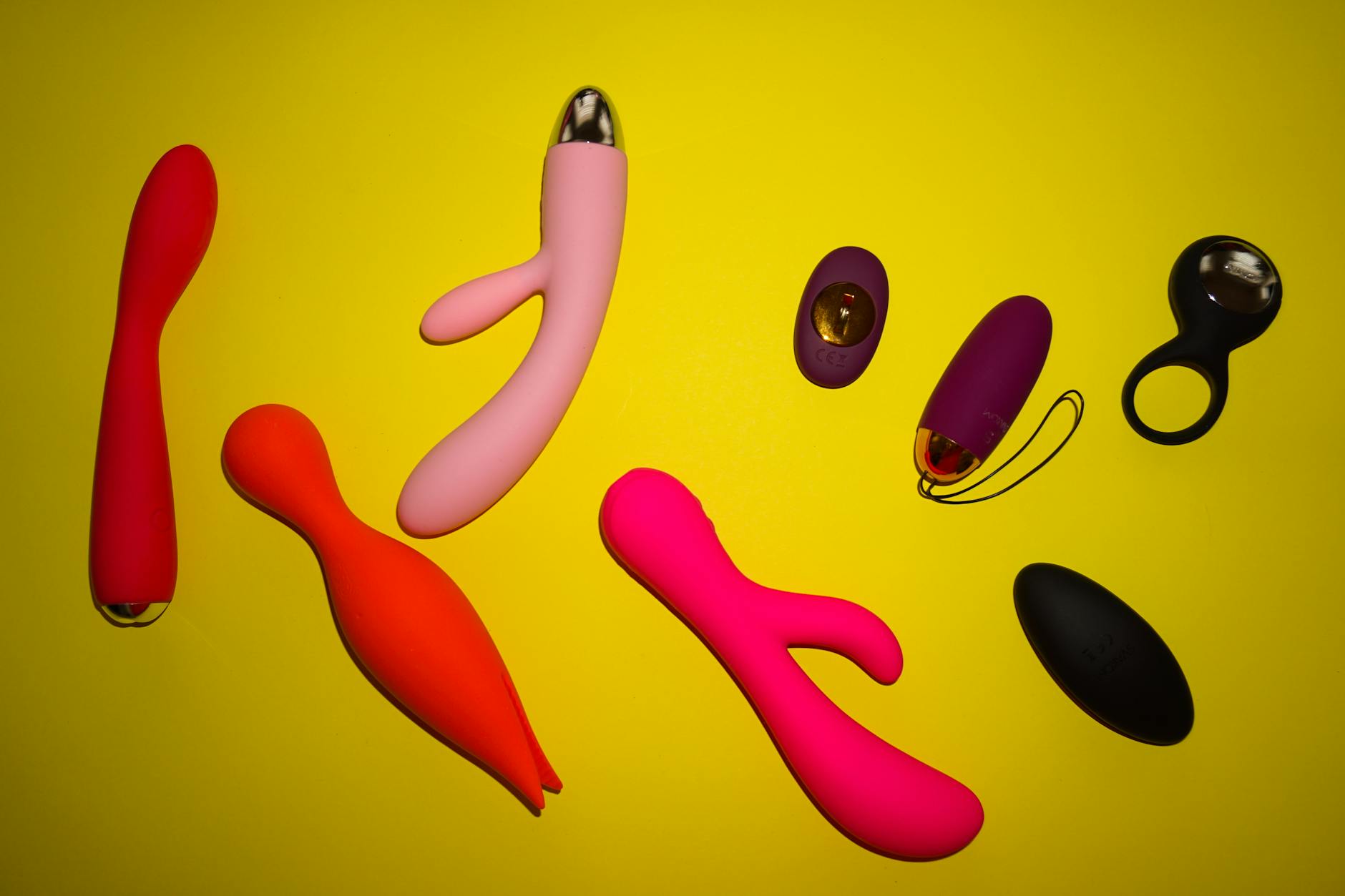
How to Use Lemon Vibrators When Antidepressants Numb Your Sensation
Let's start with the thing nobody warns you about in the psychiatrist's office: the medication that pulls you out of a depressive spiral can also pull you out of pleasure. Not metaphorically. Literally.
You take the pill. Your mood lifts. Your appetite returns. You can get out of bed. And then you notice that sex feels like touching a wall through a thick glove. Or doesn't feel like anything at all. The frustration hits different when you're finally well enough to want your life back, only to discover that part of your life has gone quiet.
This is one of the most common and least discussed side effects of antidepressants. And here's the thing that matters: it's not permanent, it's not your fault, and there are actual tools that help. Lemon clitoral vibrators, specifically, work differently on numbed tissue than vibration alone does, which is why they're worth considering if you're navigating this gap.
Why antidepressants flatten sensation in the first place
SSRIs and SNRIs work by adjusting serotonin and norepinephrine in your brain. They're not precision instruments. When you flood your system with a drug designed to change neurotransmitter function, other things shift too.
Sexual response lives at the intersection of three systems: blood flow, nerve signaling, and brain arousal. Antidepressants touch all three. They can dull the nerve signals that create sensation. They can reduce blood flow to genital tissue, which means less engorgement and less responsiveness. And they can flatten the emotional intensity that typically feeds desire. This isn't a bug or a sign the medication is failing. It's a side effect, and it's common enough that psychiatrists now screen for it more often than they used to.
The worst part isn't the flatness itself. It's the gap between knowing that pleasure should feel good and actually feeling it. Your brain remembers what an orgasm was supposed to feel like. Your body isn't delivering the goods. That gap breeds frustration, shame, and sometimes the false belief that you're broken.
You're not broken. Your nervous system is just temporarily less responsive.
What numbness actually feels like (and why it matters that you name it)
Antidepressant-induced sexual dysfunction shows up differently for different people. For some, it's complete anorgasmia. Orgasm is still technically possible but requires so much effort and time that the payoff doesn't feel worth it. For others, it's sensation loss. Everything feels muted. A 6 out of 10 pleasure experience becomes a 2.
Some people describe it as a delay. Arousal takes longer. Orgasm, when it comes, feels distant or abstract. A few report that orgasm still happens but the intensity is gone. It's like the difference between a lightning strike and a light bulb.
Why does naming it matter? Because silence makes you assume it's all in your head. It's not. Naming it as a side effect, not a personal failure, changes the conversation with yourself and your partner. You're not broken. The medication is working exactly as designed. The side effect is real. And you get to decide what to do about it.
The case for staying on the medication anyway
This is important so I'm going to say it clearly: if the medication is keeping you alive and well, the pleasure flatness is not a reason to stop taking it. Full stop.
I've worked with clients who've stopped antidepressants hoping to get their sensation back, only to find that depression returns faster than pleasure does. That's a trade I never recommend. What I do recommend is staying on the medication and working with what you have.
That work looks like this: acceptance that sensation will take time to return (or might return on a different timeline than you'd like), curiosity about what pleasure does feel available now, and tools that meet you where you are instead of where you think you should be.
Lemon vibrators, especially air-suction models like the Lem, fit into that toolkit because they work differently on numbed tissue than traditional vibrators do. The suction mechanism stimulates without the kind of direct mechanical pressure that can feel either overwhelming or completely absent when your nerve sensitivity is already compromised.
How air-suction lemon vibrators meet numbed sensation halfway
When sensation is flat, you need stimulation that's strong enough to register but not so intense that it feels like you're pressing your numb finger against the desk to see if you can feel anything. That's where the lemon clitoral vibrator comes in.
Air-suction toys work through rhythmic pulses of gentle pressure. Instead of vibration moving back and forth across tissue, suction creates a pattern of expansion and contraction. For someone whose nerve sensitivity is compromised, this feels different from buzzing. It's less dependent on sharp vibration and more on the rhythm of pressure itself.
Here's what that means practically: you're likely to feel suction before you feel vibration. The sensation registers differently in the neural pathways. So even if traditional vibrators feel like nothing, a lemon sucker might deliver something you can actually feel.
Start at pattern 1 or 2 on the Lem. Don't jump to intensity. Let your body learn the rhythm. Many clients find that over the course of 2-4 weeks of regular use, the neural pathways start to wake up. Not because the toy is magic. Because repetition and attention bring sensation back online. Your nervous system isn't dead. It's just asleep.
The timeline for pleasure returning (and why patience matters)
Sensation doesn't come back in a light switch moment for most people. It's more like a dimmer. Week one might feel like nothing. Week two, you notice a slight pulse. Week three, you feel more texture. Week four, the sensation is distinct enough that you can actually locate where the toy is on your body.
This is why solo exploration matters more than partnered sex during this phase. When you're with a partner, there's pressure to perform, to enjoy it for them, to pretend you're feeling more than you are. Solo work removes that pressure. You're just you and the toy, with no stakes except your own curiosity.
I recommend a committed 30-day experiment. Set a time, use your lemon clitoral vibrator 3-4 times a week, and track what you notice. Not whether you're having orgasms. Just what you feel. Texture changes. Temperature shifts. Rhythm preferences. The small stuff that feels negligible now will compound into real sensation over time.

Photo by cottonbro studio on Pexels
What to tell your psychiatrist (and why it matters)
Most psychiatrists will ask you about side effects at follow-ups. When they do, tell them. Sexual dysfunction from antidepressants is not shameful. It's a known, documented, increasingly treated side effect.
Your psychiatrist might offer options: adjusting the dose, changing the time of day you take it, adding a second medication to offset the sexual side effects, or switching to a different antidepressant altogether. These are legitimate medical interventions, not failures.
Don't wait six months hoping it resolves on its own. Bring it up at your next appointment. The sooner you flag it, the sooner you can explore what actually helps for your specific neurochemistry.
How partnered sex changes during this phase
If you're in a relationship, this conversation is important. Your partner needs to know that sensation flatness isn't about attraction or interest. It's neurochemistry, not desire. Frame it as a thing you're both working through, not something you're ashamed of or that they should interpret as rejection.
Consider exploring partnered sex in lower-pressure ways during this time. Foreplay that focuses on touch and connection rather than orgasm as the goal. Manual or oral stimulation that's less time-dependent than waiting for medication-dulled sensation to eventually build. If you use a lemon vibrator, your partner can hold it. Some couples find that being curious together about what sensations are returning actually deepens intimacy rather than complicating it.
The timeline for sensation returning varies wildly. For some people, it's weeks. For others, months. The key is not to make your partner's patience or your own pleasure into the measure of whether the relationship is working. Relationships survive sexual side effects. What kills them is silence and shame about it.
When to consider medication adjustments with your doctor
If you've given it a solid 8-12 weeks with the toy and no sensation is returning, or if the numbness is creating genuine distress in your relationship, loop your psychiatrist back in. Some options: lowering the dose (if your mental health allows), taking a drug-free day once a week (talk to your doctor first, this works for some people and not others), switching to a different class of antidepressant, or adding an augmentation medication like bupropion that can restore sexual function.
None of these are failures. They're adjustments. You're looking for the dose and medication that gives you both mental health and pleasure. That might take a few tries.
Building confidence as sensation returns
As feeling comes back, it often comes back unevenly. One day you'll notice a sensation you haven't felt in months, and it'll feel so small you'll wonder if you imagined it. You didn't. That's the beginning.
Use that moment to anchor to. Notice it. Celebrate it quietly. Over time, these micro-sensations compound. Your nervous system is rewaking. Your brain is relearning that pleasure is available. That's not nothing. That's actually the whole foundation of getting your embodied life back.
This is where tools like the lemon clitoral vibrator become genuinely useful, not as a fix but as a feedback loop. The toy delivers consistent, predictable stimulation. Your body responds or doesn't. Over weeks, the response gets clearer. Your confidence builds because you have proof that sensation is returning.
That proof matters when you're fighting the psychological weight of numbness. It's concrete evidence that you're not permanently broken.
FAQ: Antidepressants, sensation, and lemon vibrators
Why does air-suction feel different from regular vibration when my sensation is numb?
Air-suction toys stimulate the clitoris through rhythmic pressure pulses rather than buzzing vibration. The sensation travels through different nerve pathways. When traditional vibration feels like nothing, suction often registers because it's stimulating through a different mechanism. Think of it as an alternate route when the main highway is blocked.
How long before I feel like my old orgasms are back?
It varies hugely. Some people regain full sensation in 4-6 weeks. Others take 3-4 months. A small percentage never fully return to baseline on that specific medication, which is why talking to your psychiatrist matters. The timeline also depends on which antidepressant you're taking, your individual neurochemistry, and how long you've been on the medication. Rather than waiting for "back to normal," focus on what sensation is available now and building from there.
Can I use lemon vibrators while still on antidepressants, or should I wait until I go off?
Use them now. They're part of the rewaking process, not something to wait for. Regular stimulation actually helps train your nervous system to respond again. Waiting means losing months you could spend slowly rebuilding sensation. Plus, you might never go off antidepressants, and you deserve pleasure either way.
What if my partner thinks the numbness means I'm not attracted to them anymore?
Tell them clearly: this is medication, not emotion. Show them this article if that helps. Frame it as something you're both working through, not a relationship problem. If it's creating real distance, consider a few sessions with a couples therapist who specializes in sexual health. You don't have to solve this alone, and your partner doesn't have to guess whether you still want them.
Is it normal for sensation to come back in patches, not all at once?
Completely normal. You might feel more clitoral sensation before vaginal sensation returns. Or the reverse. You might notice that some patterns on the toy feel stronger than others. That unevenness is actually your nervous system waking up in layers. Pay attention to what's returning and build from there.
Should I switch medications if the sexual side effects don't improve?
Not immediately, but it's a conversation worth having with your psychiatrist at the 12-week mark if nothing's shifted. Some antidepressants (like bupropion) have fewer sexual side effects than others. But switching means risking mood destabilization. It's a real trade-off that's worth thinking through carefully with professional guidance.
The bottom line
Antidepressants can numb sensation. That's real. It's frustrating. And it doesn't mean you're broken or that you've lost pleasure forever. It means your nervous system is temporarily less responsive, and you get to work with tools and time to bring it back online.
Lemon clitoral vibrators, specifically the air-suction kind, work differently on numbed tissue than traditional vibrators. They give your nervous system a pattern it can recognize and respond to, even when sensation is flat. That's not a miracle. It's a tool.
Stay on your medication if it's keeping you well. Talk to your psychiatrist about the sexual side effects. Explore sensation slowly with your toy of choice. Be patient with your body. And remember that pleasure coming back is not a sprint. It's a gradual, necessary rewaking of a system that temporarily went quiet.
Your nervous system knows how to feel good. It just needs time, attention, and the right kind of stimulation to remember. If you want to talk through how to use lemon vibrators for your specific situation, my team is here to help. Reach out at /contact with any questions.