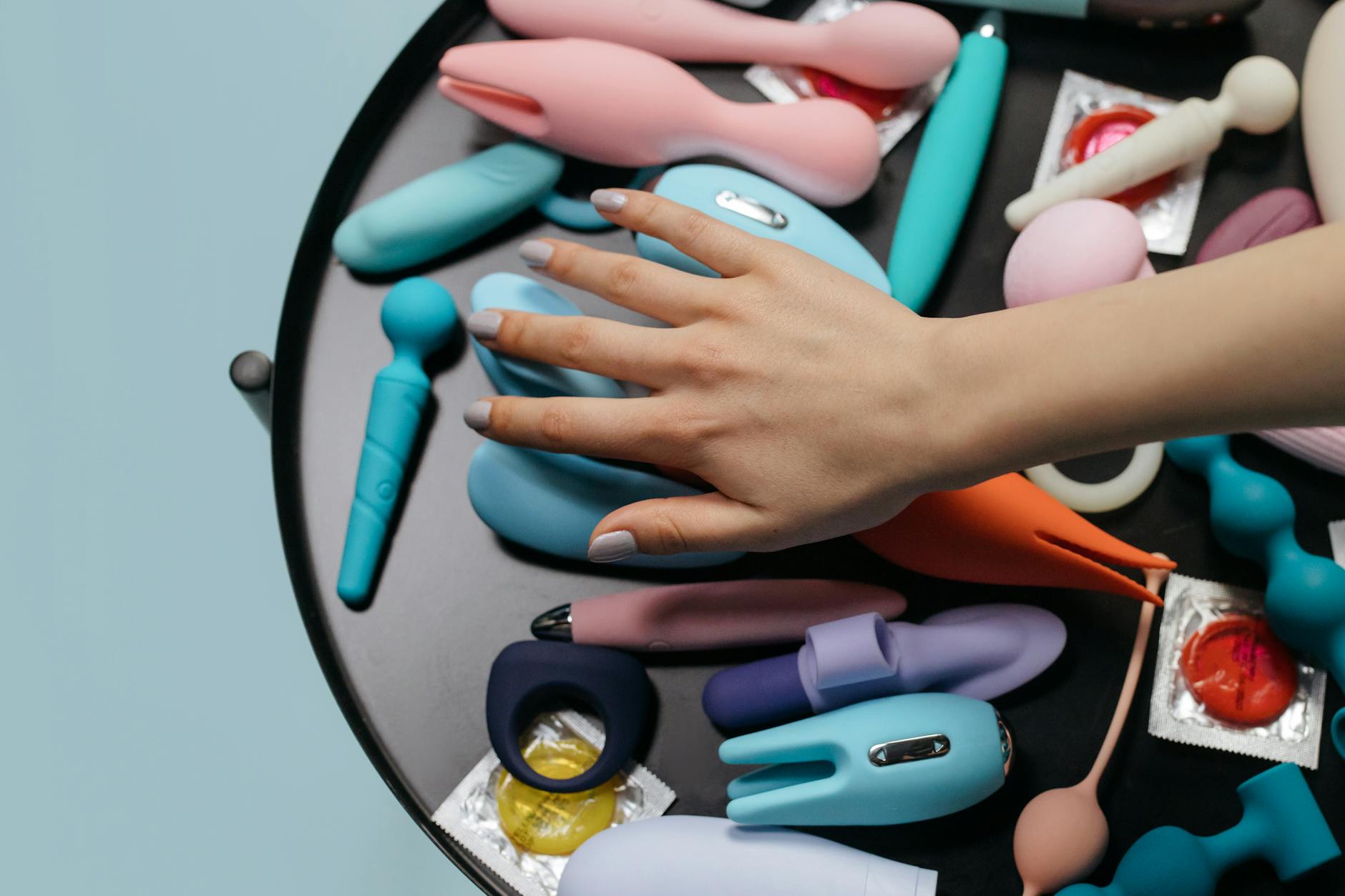
Here's what nobody tells you about stress and sex
When you're living under chronic stress, your nervous system doesn't switch off desire like flipping a light. It more like puts it into hibernation. Your brain prioritizes survival over pleasure, which makes complete biological sense. But that survival mode doesn't announce itself. It just feels like you've stopped wanting, and that shame compounds the problem.
The good news: this isn't permanent. It's not a character flaw. And it's not something you need to white-knuckle through. Your body still knows how to feel good. It's just waiting for permission to re-engage.
What chronic stress actually does to arousal
When you're under sustained pressure, your cortisol stays elevated. This activates your sympathetic nervous system, the part that handles fight-or-flight. Meanwhile, your parasympathetic nervous system, the one that handles rest-and-digest (and arousal), gets pushed into the background. Sex requires parasympathetic dominance. You literally cannot feel turned on when your body thinks danger is happening.
That's not laziness. That's neurology.
On top of that, chronic stress depletes dopamine and serotonin, the neurotransmitters that drive motivation and mood. Without them, pleasure feels like a task instead of a reward. Even when you have time and a willing partner, the spark doesn't ignite. It's frustrating and it's real.
The physical part matters too. When you're stressed, blood flow redirects away from your genitals and toward your muscles and brain. That's useful if you're running from a tiger. Less useful if you're trying to experience sensation.
Why lemon vibrators work differently when you're rebuilding
Clitoral vibrators like the Lem are particularly useful during stress recovery because they bypass the need for self-generated arousal. You don't have to feel turned on first. You don't have to wait for desire to arrive on its own schedule. You're essentially introducing direct, consistent stimulation that can gradually wake up sensation without you having to "perform" arousal.
The Lem's suction design works on a different nerve pathway than standard vibration. Instead of relying on friction and the genital reflexes that might feel dormant after months of stress, suction engages the clitoral tissue in a way that feels almost passive. You place it and it does the work. That's crucial when your nervous system is still learning to trust that pleasure is safe again.
Start with the lowest intensity pattern. The goal isn't orgasm. The goal is sensation.
The actual protocol: how to restart pleasure safely
Think of this in three phases. None of them rush.
Phase One: Exploration without expectation (Week 1-2). Use your lemon vibrator solo, in a space where you won't be interrupted. Pick a time when you're least stressed. Early morning often works better than late night, when the day's cortisol is still building. Use water-based lubricant. Start on pattern 1. Spend 10-15 minutes just noticing sensation, without aiming toward orgasm. If nothing happens, that's fine. You're rewiring your brain's association with pleasure. This is information gathering.
Phase Two: Gentle escalation (Week 3-4). Once you've spent a few sessions noticing sensation, you can gradually move through the intensity patterns. Stay with each one for 2-3 minutes before moving up. Again, the goal isn't orgasm. It's relearning what arousal feels like. Some people notice tingling. Some notice a sense of calm. Some feel nothing yet. All of those are fine.
Phase Three: Pleasure with permission (Week 5+). By now, if you've been consistent, your nervous system is starting to remember that pleasure is possible. This is when orgasm might arrive, or it might not. Either way, you're building new neural pathways. If you have a partner, this is a good time to introduce them into the practice, but only if you want to.
What to watch for (and what's normal)
Many people rebuilding after stress experience what I call sensation flatness. You feel the vibrator but it doesn't register as pleasurable. This isn't numbness. It's your parasympathetic system slowly coming back online. It takes time, sometimes weeks.
You might also feel a disconnect between your brain and your body. Your brain knows you should enjoy this, but your body hasn't caught up. That's normal. Keep going.
If you feel pain or sharp sensations, stop and give yourself a break. There's no rush. Your body will tell you when it's ready.
Some people notice their orgasms come back differently than they were before the stress. That's also common. Stress changes your nervous system's baseline. You might have weaker orgasms at first, or they might feel localized instead of full-body. This normalizes with continued practice.
The partnership conversation you need to have
If you're in a relationship, your partner might interpret your low desire as low desire for them, which is a different problem entirely. It's worth stating clearly: "I'm stressed and my body is in survival mode. This isn't about you. I'm working on rebuilding sensation with some solo time, and I'll let you know when I'm ready to include you."
You don't owe them that information if you don't want to share it. But many couples report that transparency here prevents resentment from building. Some partners also benefit from knowing the timeline. "I'm targeting 4 weeks of solo practice before we reconnect" gives everyone a concrete expectation.
When you do invite your partner back in, introduce the lemon vibrator slowly. "I've been using this to rebuild sensation. I'd like to show you how" works better than surprising them with it. If they feel displaced by the toy, remind them that clitoral stimulation is fundamentally different from partnered sex. It's not a replacement. It's an addition.
Stress-relief strategies that actually support arousal
Using the Lem matters, but context matters more. A few things that help:
Move your body during the day. Exercise is one of the fastest ways to reset your nervous system. A 20-minute walk or yoga session shifts cortisol and primes your parasympathetic system.
Prioritize sleep. Arousal is a luxury system. It only activates when your body believes basic survival is handled. Sleep deprivation convinces your nervous system that danger is still happening.
Practice breathwork for 5 minutes before using the vibrator. Box breathing (4 counts in, 4 counts hold, 4 counts out, 4 counts hold) activates parasympathetic response. It's neuroscience, not spirituality.
Reduce decision fatigue where you can. If you're stress-depleted, it's harder to access pleasure. Simplify your environment, your schedule, your choices. Save your mental energy.
If you're in a relationship, maintain low-stakes physical touch. Hugging, holding hands, kissing without the expectation of sex. This tells your nervous system that your partner is safe and pleasure is possible, even if you're not ready for sexual touch yet.
When to bring in more support
If you've been consistent for 6-8 weeks and sensation still feels completely flat, or if the stress itself hasn't begun to ease, it's worth talking to a therapist or your doctor. Prolonged stress can sometimes mask depression, which has its own arousal challenges. A professional can help you untangle what's what.
Similarly, if your partner is frustrated by the timeline, couples therapy can be genuinely useful. A therapist can help you both understand that this is a nervous system issue, not a relationship failure. It reframes the whole conversation.
Your body isn't broken. It's protective. And with time, consistency, and the right tools like a lemon vibrator that doesn't demand self-generated arousal, you'll return to pleasure. Not back to how it was, but often to something even better. Stress recovery builds resilience. You know what you're capable of surviving now. That knowledge changes everything.
Frequently asked questions
How long does it actually take to rebuild arousal after chronic stress?
It depends on the severity and duration of the stress, but most people notice shifts within 3-4 weeks of consistent practice. Complete restoration might take 2-3 months. The timeline also depends on whether the underlying stress has actually decreased. If you're still in crisis mode, arousal will remain suppressed. Addressing the stress source matters as much as using the vibrator.
Can I use lemon vibrators even if I'm not interested in orgasm right now?
Absolutely. In fact, when you're rebuilding after stress, orgasm is often not the goal for the first few weeks. The goal is sensation and nervous system reset. Many people find that removing the pressure to orgasm actually makes orgasm more likely to arrive on its own.
Is it normal to feel guilty about using a vibrator when I'm stressed?
Very common. There's often an internal narrative that pleasure is selfish when you're stressed, or that you should be using that time to fix the stress instead. But pleasure is part of nervous system regulation. Solo time with a clitoral vibrator is self-care, not indulgence. It's legitimately healing.
What if my partner wants to use the lemon vibrator with me but I'm not ready?
That's a boundary worth holding. You can say, "I need a few weeks of solo time with this to rebuild my own connection first. Then I'd like to include you." Most partners respect that timeline if it's stated clearly. If they don't, that's a separate relationship issue worth addressing.
Can stress return my arousal to normal on its own, or do I need the vibrator?
Stress recovery alone might help, but it's slow. Your nervous system often needs a reset signal, and direct pleasurable sensation provides that. The vibrator isn't a crutch. It's a tool that accelerates what would otherwise take much longer. Think of it like physical therapy for your arousal.
What if I'm using antidepressants and my arousal is still flatlined?
Some medications genuinely suppress arousal as a side effect. Talk to your doctor about whether a dose adjustment or medication switch might help. That's different from stress-related arousal suppression. A professional can help you sort out what's medication and what's stress.
If you're ready to start rebuilding, your nervous system is already waiting. Consistent, low-pressure exploration with a tool designed for clitoral stimulation gives your body permission to wake up again. You're not broken. You're just resting. And rest, when it's time, becomes return.
Questions about how to get started or what might work best for your situation? We're here. Reach out.