
Here's the thing nobody tells you about menopause and pleasure
Your clitoris doesn't retire at menopause. But the way it responds to touch absolutely changes, and that's actually where lemon clitoral vibrators enter the story. Before we get into why these toys work so well during this phase, let's be clear about what's actually happening biologically.
Estrogen decline thins the tissue in and around the vulva. That's not a moral failing. That's just physiology. The clitoral hood becomes thinner. The surrounding tissue loses some of its plumpness and elasticity. Blood flow takes longer to activate. For a lot of people, this means direct stimulation that used to feel amazing now feels sharp, too intense, or just wrong.
Here's the plot twist though. This is also when many people experience some of the most intense, satisfying orgasms of their lives. The science on why is still catching up to the lived experience, but the pattern is consistent enough that it stops being anecdote.
Why traditional vibrators can feel like the wrong tool
Most vibrators work through friction and buzz. They press directly into tissue. After menopause, that direct pressure can feel irritating, sometimes even painful. You end up turning the intensity up to compensate, which makes it worse. It's like trying to solve the problem by applying more of what isn't working.
Lemon sexual toys work differently. They use suction and gentle pulsing rather than direct vibration. That distinction matters enormously. With a lemon clitoral vibrator, the stimulation pulls rather than pushes. It creates a seal around the clitoris and works the nerve endings without aggressive friction against thinned tissue.
The result. More sensation with less irritation. Faster arousal. Deeper, more full-body orgasms reported consistently by people using these toys in this life stage.
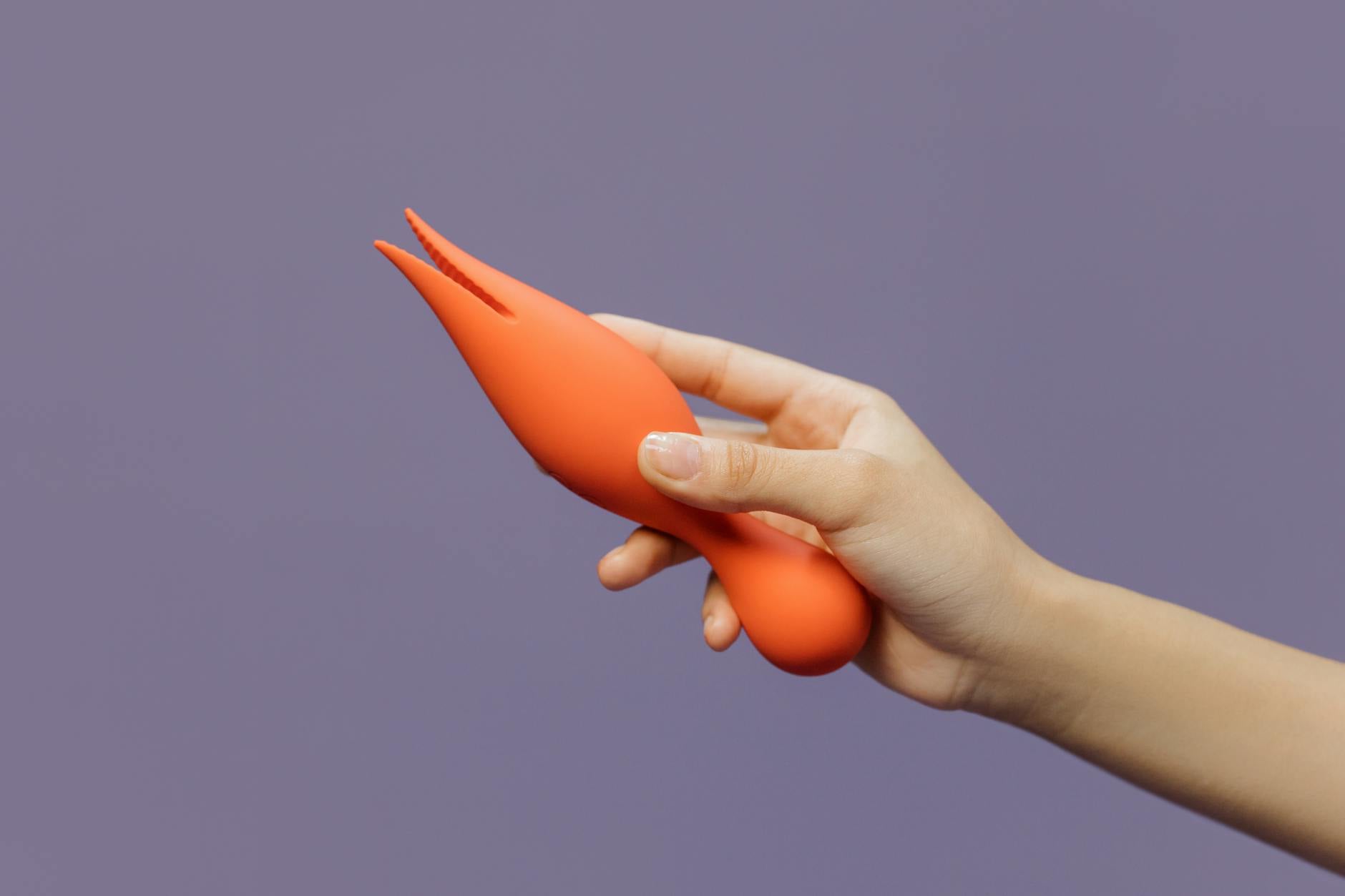
Photo by cottonbro studio on Pexels
The clitoris after menopause is still incredibly sensitive
Thin tissue doesn't mean insensitive tissue. Actually, the opposite is often true. Fewer layers means the nerve endings are sitting closer to the surface. They're more reactive, not less. The problem isn't lack of sensation. It's that the wrong kind of touch feels overwhelming.
This is where understanding the difference between stimulation types becomes practical. Vibration (especially high-frequency vibration) overstimulates thinned tissue. Suction creates a different kind of pressure. It's more dispersed. The sensation builds in waves rather than hitting all at once.
When people try lemon clitoral vibrators for the first time after menopause, the most common reaction is surprise. Not just that it feels good, but that it feels different. Richer. More three-dimensional. Less like a buzz saw and more like actually being touched with skill and intention.
Arousal mechanics shift, but the capacity doesn't disappear
Estrogen supports something called vasocongestion. That's the process where blood rushes to the genitals when you're aroused, creating swelling, lubrication, and heightened sensitivity. After menopause, this happens more slowly and less dramatically. Your body can still do it. It just needs more time and often a gentler initial touch to kickstart the process.
This is another place where lemon sexual toys excel. Because they work through suction rather than vibration, they can be used at lower intensity settings without feeling completely ineffective. You can start at a gentle pulse, let arousal build naturally, then increase intensity as your body responds. With traditional vibrators, you often feel like you have to jump straight to a stronger setting or nothing happens at all.
The timeline matters too. Allowing fifteen to twenty minutes for arousal to build instead of five is not a limitation. It's actually an advantage if you're in a relationship. That extended warm-up creates more space for connection, conversation, and building anticipation with a partner.
Lubrication needs change, and that's completely normal
Vaginal lubrication depends on estrogen. Less estrogen means less natural lubrication. This is not because your body is broken. It's because the hormone that supports this function has declined. Full stop. But here's what matters: lubrication is cheap, it works, and using it is not cheating or settling.
Water-based lubricant applied generously before using a lemon vibrator makes the experience dramatically better. You're not compensating for broken anatomy. You're supporting your body's actual needs at this life stage. A silicone toy like a quality clitoral vibrator paired with water-based lube feels luxurious, safe, and sustainable.
Some people also find that the stimulation from the lemon clitoral vibrator itself encourages blood flow and natural lubrication after a few minutes of use. The suction action can feel almost like a massage that wakes up the whole area. Once arousal is established, the body often catches up beautifully.
The psychological shift matters more than you'd expect
Menopause often arrives with permission you didn't know you needed. If you've spent decades making sex about someone else's pleasure or timeline, menopause can be the moment you stop. The cognitive shift alone changes everything.
Postmenopausal people consistently report that they touch themselves with more intention, less rushing, and more focus on exactly what feels good rather than what they think should feel good. A lemon clitoral vibrator becomes a tool for that self-knowledge, not a workaround for broken equipment.
The toy literally cannot judge. It delivers exactly what you set it to deliver. There's no performance pressure. No wondering if you're taking too long or being too loud or too quiet. Just sensation and response. For a lot of people, that's genuinely transformative.
How to actually use a lemon vibrator in this phase of life
Start with lubrication. Generous amounts. Water-based, applied to the external area before you even turn the toy on. Give yourself ten minutes just for arousal. Touch yourself. Think about what turns you on. Let your heart rate rise a little.
Begin with the lowest intensity setting. For lemon clitoral vibrators, even the gentlest setting often creates surprising sensation because of how the suction works. You're not looking for immediate intensity. You're looking for the right rhythm that your body wants to follow.
If you're using the toy with a partner, communication is everything. What felt amazing at twenty-five might feel terrible at fifty-five. What you thought you hated at thirty might be exactly right now. This is the time to actually explore instead of assuming.
Allow things to develop. One of the gifts of this life stage is that you have permission to take your time. Lemon sexual toys reward patience. The longer you use them, the more your body relaxes into the sensation, the more intense the response becomes.
The orgasm question: yes, they're still possible
Maybe different, maybe more intense, maybe requiring a different setup than before. But absolutely still possible. The neural pathways that create orgasm don't disappear. The clitoris itself doesn't stop having the capacity. What changes is the route to get there.
For a lot of people, orgasms after menopause feel more localized but deeper. Less like a full-body explosion and more like a concentrated, profound release. Some people experience longer orgasms. Some experience multiple orgasms more easily. Some find that the mental component becomes more important than the physical.
A quality lemon clitoral vibrator accommodates all of these variations. You can use it however your body actually responds, not how you think it should respond.
When to consider talking to a doctor
If intercourse itself is painful, that's worth mentioning to a gynecologist. Genitourinary syndrome of menopause is real, often treatable with topical estrogen creams, and absolutely worth addressing. That's separate from exploring pleasure with toys.
If you're experiencing complete loss of sensation or numbness that concerns you, same thing. That's not a normal part of menopause and deserves professional attention. But reduced natural lubrication and slower arousal? That's standard. That's what lemon vibrators are designed to support.
The bigger truth about pleasure after fifty
Your capacity for pleasure doesn't end at menopause. It transforms. The body you have now is different from the one you had at twenty-five. It's also often more responsive to the right kind of touch, more able to focus on sensation without distraction, and more willing to prioritize its own needs.
Lemon clitoral vibrators work so well in this phase because they're designed around how the body actually works now, not how it worked before. They're intelligent tools for a different stage of life. Using them isn't settling. It's getting smarter about your own pleasure.
For more on optimizing your experience with these toys, check out our guide on why lemon vibrators work better for clitoral sensitivity and our complete buying guide to finding the right tool for your body.
People also ask
Do clitoral vibrators work differently on post-menopausal bodies?
Yes. Thinned tissue responds better to suction-based stimulation than to direct vibration. Traditional vibrators can feel too intense on sensitive tissue after menopause. Lemon clitoral vibrators use a gentler approach that most people find more comfortable and ultimately more effective. Arousal also takes longer to build, so you're not looking for immediate response. You're building sensation over time.
Can you still have orgasms after menopause?
Absolutely. The clitoris doesn't stop functioning. The pathway to orgasm changes, but the capacity remains intact. Many people report their most intense orgasms happening after menopause. The difference is usually that arousal requires more time, different kinds of touch, or sometimes a shift in what mentally turns you on. A quality lemon vibrator accounts for these changes.
What's the best lubricant to use with a lemon vibrator after menopause?
Water-based lubricant, applied generously. Menopause reduces natural lubrication, so external lubricant isn't optional. It's supportive. Water-based formulas are compatible with silicone toys and wash off easily. Apply before you start and reapply as needed during use. This isn't a workaround. It's just what your body needs at this stage.
Why does direct vibration feel uncomfortable after menopause?
Estrogen supports tissue thickness and cushioning around sensitive nerve endings. When tissue thins, those nerves sit closer to the surface. Direct vibration can feel overstimulating or even painful. Suction-based stimulation (like what lemon clitoral vibrators provide) distributes pressure differently and feels more comfortable on thinned tissue while still delivering intense sensation.
How long does arousal take after menopause?
Plan for fifteen to twenty minutes instead of five. This isn't a sign something's wrong. It's just how the body works now. Vasocongestion takes longer to develop. The good news? That extended timeline is often better for partnered sex because it creates more space for intimacy and communication. Solo, it means you get longer to explore what feels good.
Is it normal to need a toy after menopause when you didn't before?
Completely normal. Your body's response to touch changed. A lemon vibrator isn't a sign of decline. It's a tool that accounts for how your body actually works now. Plenty of people find they didn't need toys before menopause but absolutely prefer them after because they understand their own pleasure better and want stimulation that matches their actual response.
The bottom line
Menopause changes your body's response to touch. It doesn't end your capacity for pleasure. Understanding that difference is everything. Lemon clitoral vibrators work so well during this phase because they're designed for how your body actually functions now, not how it used to function. That's not settling. That's being intentional about your own pleasure. You deserve that.
Ready to explore further? Learn how to use a lemon vibrator with techniques designed for this stage of life, or reach out to our team with questions at /contact.